
7 Best Shippeo Alternatives for Mid-Market Shippers - 2026 Comparison
Sorted by what you actually need the tool to do — not by how big the vendor is. Because if you're still planning transport in Excel, the answer isn't a better tracking layer. It's not a tracking layer at all.

Bring structure, visibility, and compliance to your transport operations


Summary
Seven Shippeo alternatives compared for European shippers: project44, FourKites, Transporeon (Sixfold), Tive, Wakeo, Descartes MacroPoint and Deliwell. Six are visibility platforms; one is a full TMS. Inside: a side-by-side table with pricing and go-live times, what Shippeo does well, why shippers look elsewhere, and how to tell which category you actually need — because if you're still planning transport in Excel, a tracking layer solves the wrong problem.
If you're shopping for Shippeo alternatives, you're almost certainly comparing visibility platforms. That's what Shippeo is. It tracks your freight in real time, predicts ETAs, and flags disruptions before they hit.
But before you line up five more visibility tools, one question decides the whole search. Do you need to watch your freight, or run it?
A visibility platform tells you where a shipment is. It doesn't plan it, book the carrier, ensure compliance with EU rules, or validate the invoice. If you already have a TMS and just want a sharper tracking layer on top, the list below has six strong options. If you're a mid-market shipper still planning transport in Excel and chasing updates over WhatsApp, a visibility tool solves the wrong problem.
We sorted these seven Shippeo alternatives by use case, not by who paid for placement. Read further to see which one is the best for you.
TL;DR
- Shippeo is an enterprise real-time visibility platform, not a TMS.
- If you need pure multimodal visibility at enterprise scale, project44 and FourKites are the closest like-for-like alternatives.
- For visibility tied to a European carrier and tendering network, look at Transporeon (Sixfold).
- For device-level tracking of high-value or temperature-sensitive cargo, Tive wins.
- For ocean and air import-export flows, Wakeo is the European specialist.
- For North American track-and-trace, Descartes MacroPoint might be the best choice.
- If you're a mid-market European shipper who needs to plan, dispatch, comply, and invoice (not just track), you don't need a visibility layer. You need a TMS with built-in visibility. Then choose Deliwell. Book a free demo to see how Deliwell can help you optimize your operations and reduce costs.
Best Shippeo Alternatives: Side-by-Side Comparison
One thing to keep in mind as you scan the table. Most tools here are visibility platforms that track freight on top of your existing stack. Deliwell is a full TMS that manages transport and provides visibility. Same list, two different jobs.
And now, let’s see some of the reasons why people are looking for Shippeo alternatives, as well as the best companies on the list for different use cases.
What Shippeo does well
Shippeo is one of the best real-time transportation visibility platforms out there. It tracks your shipments across road, rail, sea, and air, then predicts when each one will arrive and flags delays before they turn into problems. The ETAs are reliable, and coverage is rarely the issue.
It's built for big, global supply chains. If you already run a TMS or ERP and want a clean visibility layer feeding it, Shippeo does that job well.
Why do shippers look for Shippeo alternatives?
Shippeo is a strong platform, but it isn't the right fit for everyone. The reasons people go looking for an alternative usually come down to four things.
- Enterprise-only pricing - It's quote-based with no published price and no entry tier. A smaller team can't just sign up and start.
- Visibility and nothing else - Shippeo sits on top of your stack and tells you where freight is. You still need a separate system to plan and book it. For a mid-market shipper, that's a lot of platforms for one job.
- No native EU compliance - There's no Romanian e-Transport, no UIT generation, no e-CMR. A CEE shipper needs to handle all of that somewhere else.
- Built for global enterprises - The whole product assumes a large supply chain team and the budget to match.
None of this makes Shippeo a bad tool. It makes it the wrong category for many people searching for it. And that's the distinction that should drive your decision, so it's worth one short section before the list.
project44: Best Shippeo alternative for the deepest multimodal visibility network

project44 (now branded Movement) is the platform most buyers weigh against Shippeo first. It's a Chicago-based RTTV leader and the other consistent name at the top of Gartner's quadrant.
Strengths
- Tracks road, ocean, rail, air, and parcel through one of the largest carrier networks in the category.
- Strong order-level visibility, dynamic ETAs, and automated exception detection.
- Deep API-first integration model for connecting carriers, 3PLs, and internal systems.
- Adds planning and inventory features beyond pure tracking.
Shortcomings
- Enterprise pricing and a field-sales motion. Not built for a mid-market budget.
- Implementation and carrier onboarding run for months.
- It's a visibility layer, so it still needs a TMS underneath to plan and execute.
How project44 compares vs Shippeo
Similar category and similar scale. project44 often wins on network breadth, Shippeo on data-quality reputation in Europe. Reviewers generally call project44 the more expensive of the two.
FourKites: the best Shippeo Alternative for North America-heavy networks
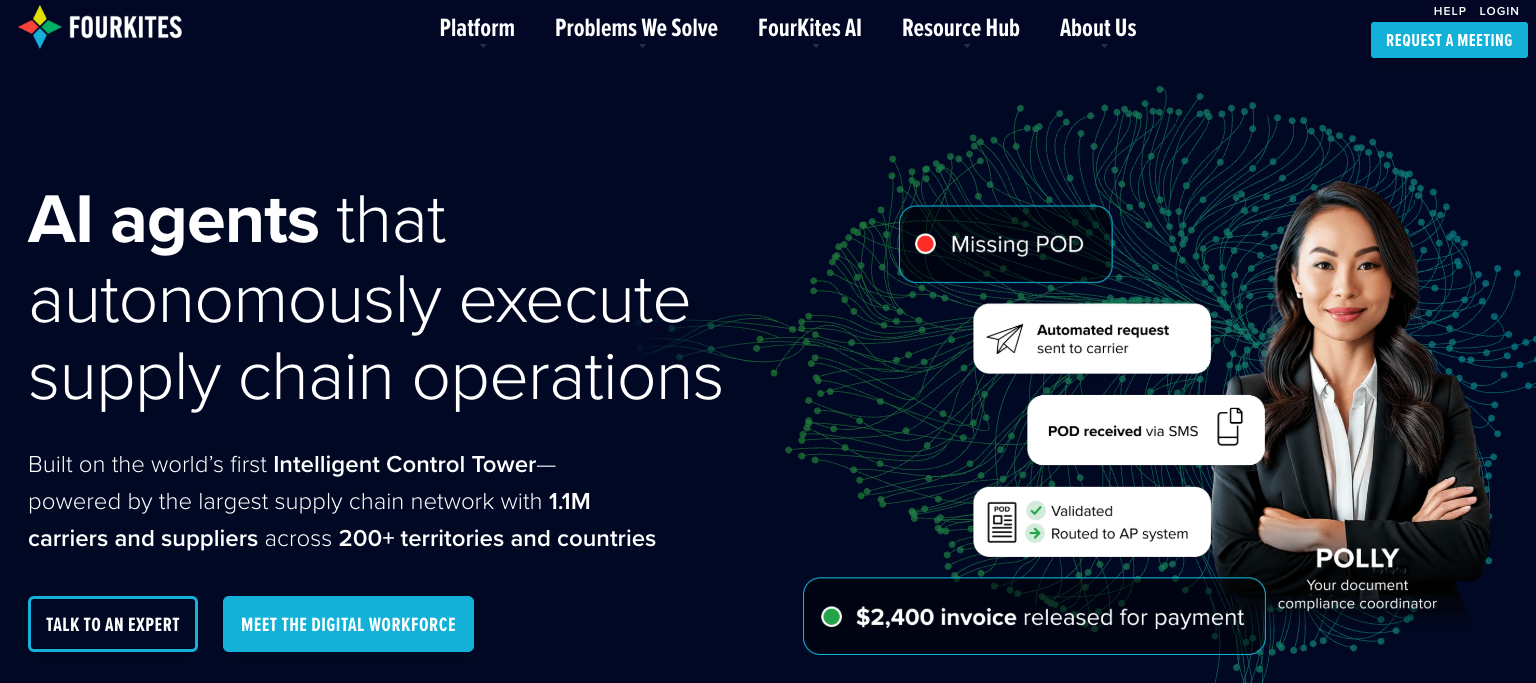
FourKites is the other big Chicago RTTV name, positioned around supply chain intelligence rather than tracking alone.
Strengths
- Real-time visibility across road, rail, ocean, and air, with deep North American carrier coverage.
- Broad integrations across GPS-ELD, TMS, and carrier dispatch systems.
- Yard and facility visibility plus AI features for exception management.
- Trusted by large Fortune 500 shippers.
Shortcomings
- Enterprise pricing and rollout timelines, same as its peers.
- European road coverage is solid but not the home-field strength it has in North America.
- Visibility-only scope. No planning, compliance, or invoicing.
How FourKites compares vs Shippeo
Comparable enterprise RTTV. FourKites skews stronger in North America, Shippeo in Europe. Reviewers tend to rate FourKites as the pricier option.
Transporeon (Sixfold): best for visibility tied to freight sourcing

Transporeon is a European transportation platform owned by Trimble. Its visibility product runs on Sixfold technology, and visibility comes baked into the wider suite rather than sold as a standalone.
Strengths
- One of the largest carrier and tendering networks in Europe.
- Visibility ships as standard alongside freight sourcing, tender management, and dock scheduling.
- Multimodal coverage with a strong DACH and EU-wide footprint.
- Useful when you want tracking and carrier procurement from the same vendor.
Shortcomings
- Big, enterprise-grade platform with the cost and complexity to match.
- Long implementation cycles and a field-sales process.
- Heavier than a mid-market team usually needs if all they want is tracking.
How Transporeon compares vs Shippeo
Transporeon bundles visibility into a broader sourcing and tendering suite. Shippeo is a focused, best-of-breed visibility specialist.
Tive: best Shippeo Alternative for high-value and cold-chain cargo
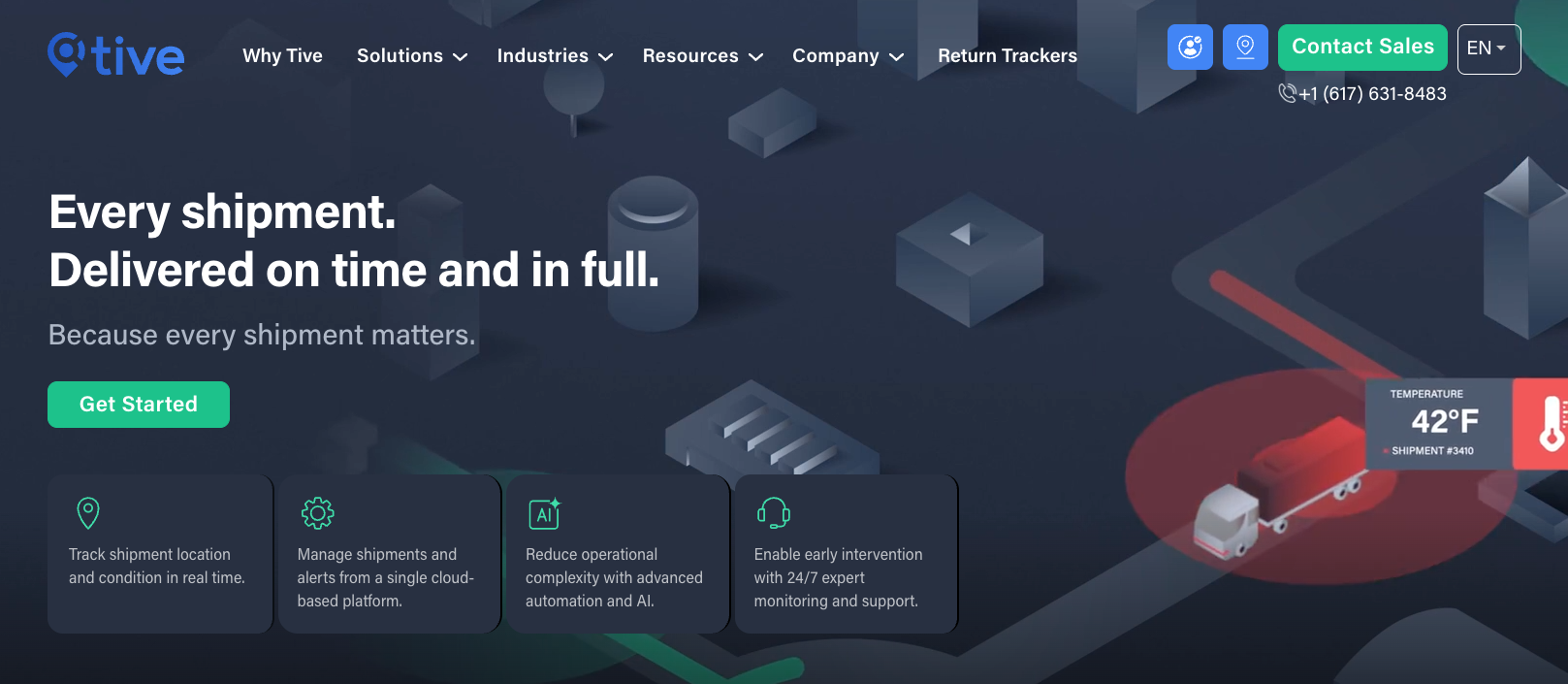
Tive takes a different approach. It pairs physical multi-sensor trackers with a cloud platform, so you get device-level data, not just carrier-reported milestones.
Strengths
- Real-time location plus temperature, shock, and light data from its own trackers.
- Strong fit for pharma, food, electronics, and any cargo where condition matters.
- Optional 24/7 live monitoring service and tamper-detection seals.
- Faster to start than network-only platforms, since a tracker ships and works.
Shortcomings
- You're buying and managing hardware, which adds device cost and logistics.
- Built for monitoring shipments, not planning or executing them.
- Less relevant if you just need carrier-level ETAs across a road network.
How Tive compares vs Shippeo
Tive gives you sensor-grade truth on individual high-value loads. Shippeo gives you network-wide carrier visibility without hardware.
Wakeo: best Shippeo alternative for ocean and air import-export
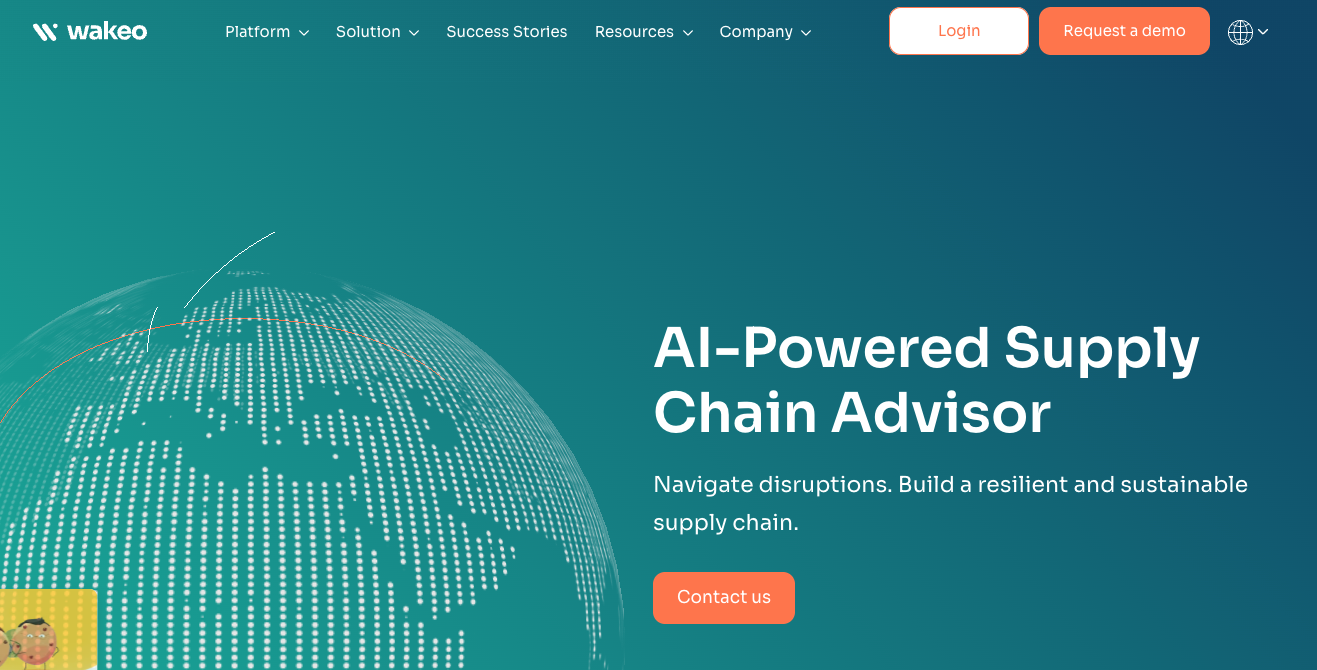
Wakeo is a French platform focused on intercontinental, multimodal visibility. If your pain is overseas freight, it's the European specialist.
Strengths
- Door-to-door tracking across sea, air, rail, and road, with a focus on overseas flows.
- Predictive ETAs, reliability scoring, and disruption alerts for long international lanes.
- Carbon and freight-rate data built into the platform.
- Connects to TMS and ERP backbones through APIs, and partners with SAP and Microsoft.
Shortcomings
- Strongest on international and ocean freight, lighter for domestic road-only operations.
- Visibility scope only. No planning, dispatch, or compliance execution.
- Enterprise sales motion.
How does Wakeo compare to Shippeo?
Both are French RTTV platforms. Wakeo leans harder into overseas and ocean visibility; Shippeo covers a broader multimodal base with a larger road network.
Descartes MacroPoint: best for North American FTL and brokerage

Descartes MacroPoint is the visibility arm of Descartes Systems Group, built around automated track and trace for shippers and freight brokers.
Strengths
- One of the largest carrier-location networks, strong in North American FTL.
- Automated track and trace that reduces check calls and manual status chasing.
- Backed by Descartes' broader logistics ecosystem.
- Good fit for brokerage operations managing many carriers.
Shortcomings
- North America is the core strength, so it's less of an EU-first choice.
- Tracking-focused. It assumes you run planning and execution elsewhere.
- Enterprise procurement and onboarding.
How does Descartes MacroPoint compare with Shippeo?
Descartes MacroPoint is strongest in North America for FTL and brokers. Shippeo is the more multimodal, Europe-centric platform.
Deliwell: best Shippeo alternative for mid-market EU shippers who need to run transport, not just watch it
Here's the pick for everyone who realized they don't need a visibility tool at all. If you're still running transport on spreadsheets and email, tracking isn't your problem.
Deliwell is a cloud TMS built for mid-market shippers in Romania and the wider CEE region. It covers the full transport lifecycle in one place. You plan and allocate transports, dispatch carriers, track delivery, generate compliance documents, and validate invoices, all from the same system. Visibility is part of it, not the whole point of it.
The part no visibility platform on this list offers is the native EU compliance. Deliwell generates Romanian e-Transport and UIT codes and handles e-CMR inside the workflow, so your team isn't bolting compliance onto a tracking tool.
Strengths
- One system for planning, dispatch, tracking, compliance, and invoice validation, so teams stop juggling Excel, email, and WhatsApp.
- Native Romanian e-Transport, UIT generation, and e-CMR. No separate compliance workaround.
- Connects sales, warehouse, finance, and logistics around the same data instead of leaving them in silos.
- Affordable and value-based, aligned with mid-market budgets. All-in-one SaaS with no hidden IT costs.
- Go-live in days, and it integrates with your ERP (SAP, Navision, and others).
- Trusted by 10030+ mid-market shippers across Romania and CEE, including names like Stihl, Sonepar, and Frigoglass.
Shortcomings
- Not built for very small operations running under 50 shipments a month.
- Not the right fit if you rely on five or more GPS providers and need that many live integrations.
- Air and sea costing is supported on an all-in basis, so deeply itemized international freight costing isn't the target.
- Not designed for specialized freight like liquids, gas, or live animals.
Pricing
Starting at €250/month. Contact Deliwell for a custom pricing proposal tailored to your needs. The model stays value-based and mid-market friendly, with no hidden IT costs.
How does Deliwell compare with Shippeo?
These two products are in totally different category. Shippeo is enterprise visibility built into your stack. Deliwell is the stack for a mid-market shipper, with visibility included and EU compliance built in. If a customer or parent group mandates a visibility provider, Deliwell can run alongside it as your TMS.
Book a strategy call with the Deliwell team to see how they can help you optimize your operations and reduce costs.
What’s the best Shippeo alternative for you?
If you already run a TMS and want a sharper enterprise visibility layer, start with project44 or FourKites. They're the truest like-for-like Shippeo alternatives.
If you want visibility bundled with European carrier sourcing and tendering, look at Transporeon (Sixfold).
If your problem is protecting high-value or temperature-sensitive cargo on specific lanes, Tive gives you sensor-level data.
If your freight is mostly overseas containers and air, Wakeo is the European specialist.
If you're a North American shipper or broker focused on FTL track and trace, Descartes MacroPoint fits.
And if you're a mid-market European shipper still planning transport in spreadsheets, skip the visibility aisle entirely. You need a TMS that plans, executes, and keeps you compliant. That's Deliwell, and you can be live in days.
Book a demo call with Deliwell.
FAQ
Is Shippeo a TMS?
No. Shippeo is a real-time transportation visibility platform. It tracks shipments and predicts ETAs across road, rail, sea, and air, then feeds that data into your existing TMS or ERP. It doesn't plan transports, book carriers, generate compliance documents, or validate invoices on its own.
What is the best Shippeo alternative?
It depends on what you actually need. For enterprise multimodal visibility, project44 and FourKites are the closest matches. For high-value or cold-chain cargo, Tive. For overseas freight, Wakeo. If you're a mid-market shipper who needs to run transport end to end rather than just track it, Deliwell is the better fit because it's a full TMS with visibility and EU compliance built in.
How much does Shippeo cost?
Shippeo uses enterprise, quote-based pricing with no published tiers, so cost depends on your shipment volume and scope. For comparison, Deliwell starts at €250/month with a custom proposal tailored to your needs, which makes it more accessible for mid-market budgets.
Does Shippeo handle Romanian e-Transport and e-CMR compliance?
No. Shippeo focuses on visibility data, not local regulatory compliance. For native Romanian e-Transport, UIT generation, and e-CMR, you'd need a TMS that builds those into the workflow. Deliwell does, which is why CEE shippers with compliance obligations often choose it over a visibility-only platform.
Case studies


Sonepar Romania centralises transport reporting and cost control with Deliwell



Inteva gains full transport visibility and eliminates manual work with Deliwell



Hamilton Central Europe reduced transports costs by 15% by replacing their old TMS with Deliwell
