
7 Best FourKites Alternatives: Competitors Compared for 2026
Grouped by the job you need done. If you're still running transport in Excel, the missing piece isn't a control tower — it's the TMS it sits on

Structură, vizibilitate și conformitate pentru operațiunile tale de transport.


Rezumat
FourKites is moving from visibility into AI orchestration. We compare seven alternatives by the job they do: project44, Shippeo, Transporeon, Tive, Descartes MacroPoint, Overhaul, and Deliwell. We also explain why mid-market EU shippers still on Excel need a compliance-native TMS before any control tower.
FourKites used to call itself a visibility platform. But in 2026, it’s something entirely different. It now sells AI orchestration, with agents that chase late carriers, resolve PO mismatches, and book dock appointments on their own.
That shift matters when you're shopping for an alternative. Agents only earn their keep if there's a system in place for them to work within. A control tower can flag a delayed shipment, but the fix still lands in your TMS, your planning tool, or someone's inbox.
So the real question is whether you need a visibility platform at all, or whether the thing you're actually missing is the system that runs the freight in the first place.
These seven cover both cases. We grouped them by the job you're trying to do, and after reading the article, you’ll know exactly what FourKites alternative is the best for you.
TL;DR
FourKites is an enterprise real-time visibility platform that's moving into AI-driven orchestration. The best alternative depends on what you need.
- For the closest head-to-head visibility network, project44 is the one most buyers compare it against.
- In Europe, Shippeo leads on multimodal visibility, and Transporeon ties tracking to a large carrier and tendering network.
- For cargo, you need to monitor by condition; Tive puts sensors on the shipment itself.
- For North American track and trace, Descartes MacroPoint fits, and Overhaul is the pick when security and theft are the real worry.
- If you're a mid-market European shipper still running transport on Excel, you don't need a control tower yet. You need a system that it would sit on top of. That's Deliwell, live in days with EU compliance built in. Book a free demo with Deliwell.
Best FourKites Alternatives: Side-by-Side Comparison
Six of the tools below are visibility platforms in roughly the same tier as FourKites, so they fit if you're replacing the tracking layer.
The last one is there for a different reader. Plenty of mid-market shippers get pitched a control tower when they don't yet have a TMS to plug it into. Deliwell is in the table, so you can see where that line falls.
What FourKites Does Well
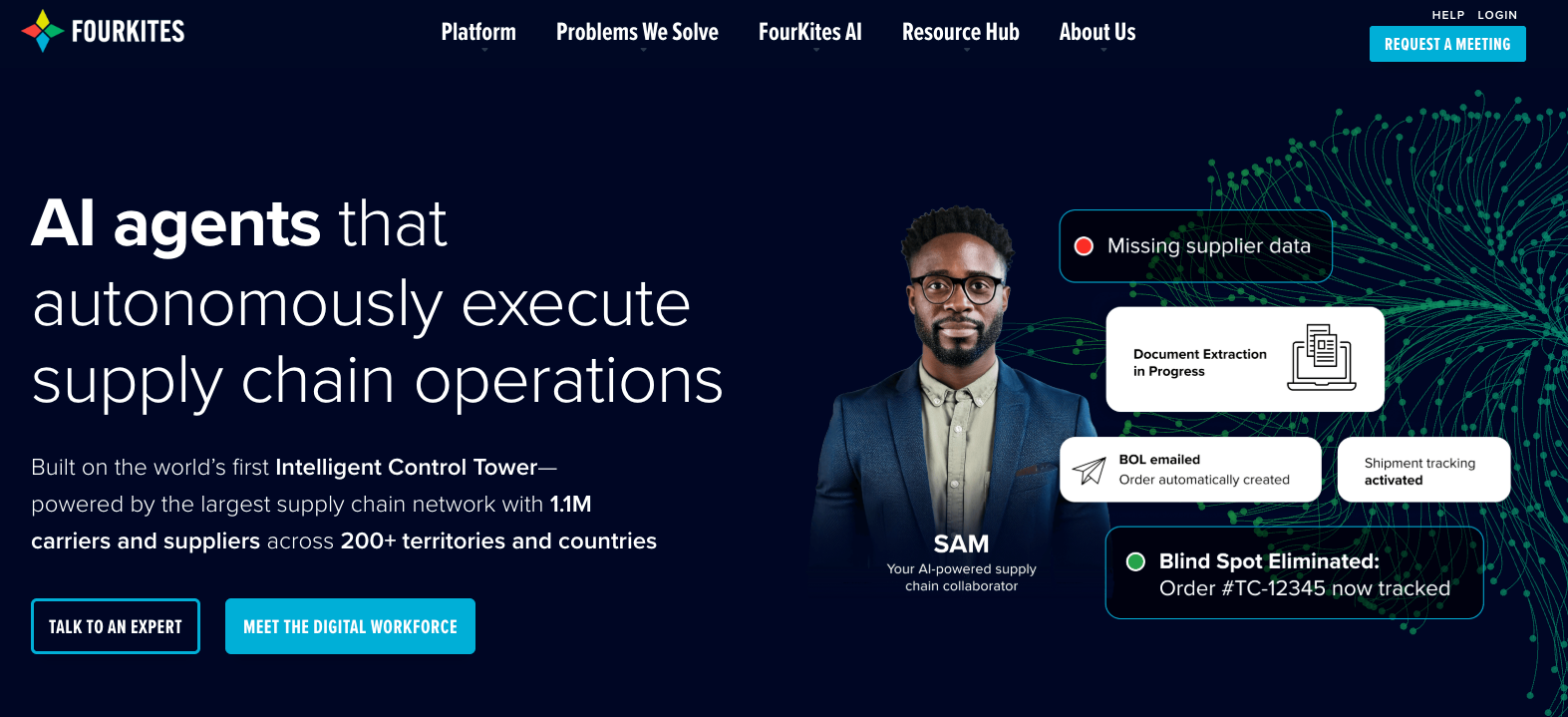
FourKites runs one of the largest real-time visibility networks in logistics. It tracks shipments across road, rail, ocean, air, and parcel, pulling data from GPS, ELDs, telematics, and mobile apps to give shippers predictive ETAs and early warnings on shipments that are running late.
Its newer work is the interesting part. The Intelligent Control Tower adds AI agents that take action on routine workflows instead of just surfacing them, and the 2026 launch of Loft pushes that automation across other enterprise systems too. For a Global 1000 shipper with a deep existing stack, FourKites can sit on top of all of it and coordinate the messy handoffs between carriers, yards, and warehouses. At that scale, few platforms match its reach.
Why Do Shippers Look for FourKites Alternatives?
FourKites is strong and built for a particular kind of buyer. Teams shop around when the fit starts to slip. A few common reasons:
- It's priced and scoped for the enterprise. Quote-based pricing, a field-sales process, and a feature set aimed at very large, complex networks. Smaller operations pay for reach they won't use.
- Coverage depends on who's connected. Visibility quality rises and falls with carrier and partner participation, so onboarding becomes the gating factor on how much you actually see.
- Seeing a problem isn't the same as fixing it. The orchestration agents help here, but they assume you already run the systems they act on. Without a TMS or planning tool underneath, there's little for them to orchestrate.
- Its home turf is North America. Coverage is global, but the network's deepest strength lies in the US.
- No native EU compliance. Romanian e-Transport, UIT codes, and e-CMR aren't part of it, so a CEE operator handles those elsewhere.
None of that is a knock on the product. It points to a fit question, and the right answer varies a lot depending on your size and where you ship from.
project44: Best FourKites Alternative for a Like-for-Like Visibility Network

project44 is the name that comes up next to FourKites more than any other. The two get pitted against each other in most evaluations, and buyers often shortlist both before picking one.
Strengths:
- Tracks road, ocean, rail, air, and parcel across one of the deepest carrier networks in the category.
- API-first design that connects carriers, 3PLs, and internal systems cleanly.
- Order-level visibility with dynamic ETAs and automated exception alerts.
- Reviewers often find it quicker to set up than FourKites.
Shortcomings:
- Enterprise pricing and a sales-led buying process.
- Carrier onboarding still takes real time before coverage is complete.
- A visibility layer at heart, so planning and execution live in other tools.
How does project44 compare to FourKites?
These two are the closest match in the market. project44 tends to win on ease of setup and network breadth, while FourKites pushes harder on AI agents and autonomous workflows. If you want pure visibility with the least friction, project44 is usually the safer pick. If the automation roadmap is what you're buying, FourKites leans in further.
Shippeo: Best FourKites Alternative for European Multimodal Visibility
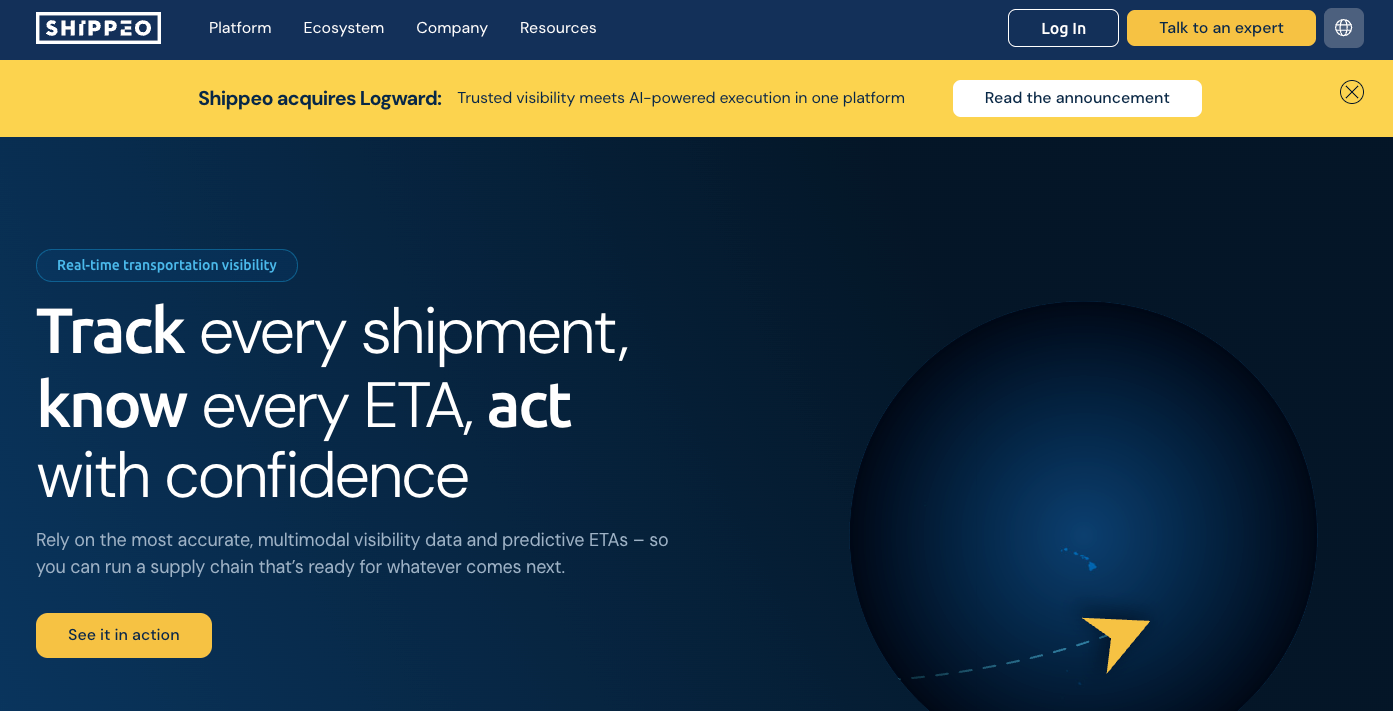
Shippeo is the European answer to FourKites. It's a Paris-based platform with particularly strong coverage across the continent's road network, which makes it a natural fit for shippers whose freight mostly moves inside Europe.
Strengths:
- Multimodal tracking with accurate machine-learning ETAs.
- A very large carrier and integration network, well developed across the EU.
- Strong reputation for data quality among European shippers.
- Carbon data for comparing carriers and modes.
Shortcomings:
- Enterprise, quote-based pricing with no entry tier.
- Visibility only, so it sits on top of your planning and execution stack.
- No native handling of local compliance like Romanian e-Transport.
How does Shippeo compare to FourKites?
Both are RTTV leaders, and the split is mostly geographic. Shippeo runs deeper across European road freight, while FourKites carries more weight in North America and is further along on autonomous agents. For an EU-first operation, Shippeo often delivers cleaner coverage where it counts.
Transporeon (Sixfold): Best FourKites Alternative for Visibility Tied to Carrier Sourcing

Transporeon comes at the problem from a different starting point. It's a European platform owned by Trimble, and its visibility (built on Sixfold) ships as part of a broader suite that also handles freight sourcing, tendering, and dock scheduling.
Strengths:
- One of the largest carrier and tendering networks in Europe.
- Visibility bundled with procurement, so tracking and sourcing share a vendor.
- Multimodal coverage with a strong DACH and EU-wide presence.
- Useful when you want more than tracking from a single platform.
Shortcomings:
- A large, enterprise-grade suite with the cost and complexity that brings.
- Longer implementations and a field-sales motion.
- More platform than a team needs if tracking is the only goal.
How does Transporeon compare to FourKites?
FourKites is a focused visibility-and-orchestration platform. Transporeon wraps visibility inside a wider sourcing and tendering suite. If carrier procurement and tracking belong together for you, Transporeon makes sense. If you want a best-of-breed visibility tool, FourKites stays the sharper choice.
Tive: Best FourKites Alternative for Condition-Sensitive Cargo
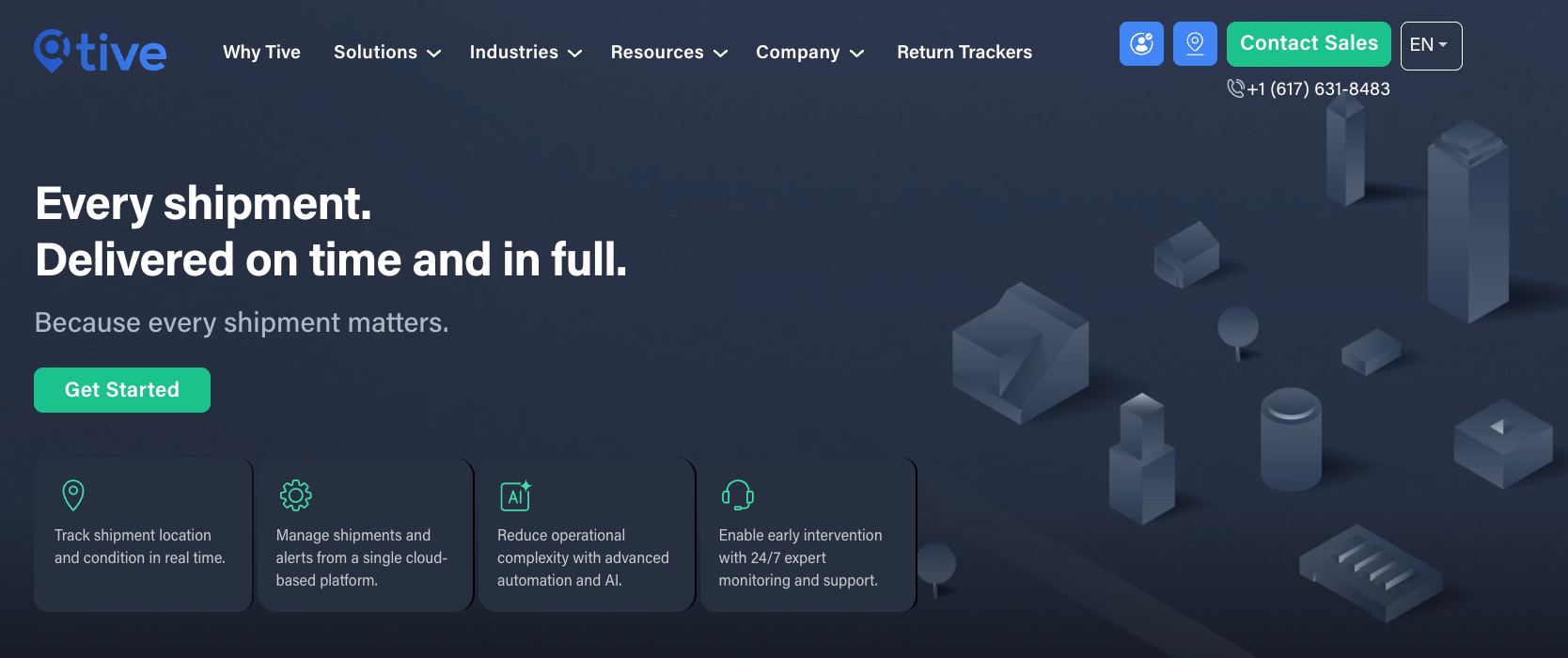
Tive solves visibility with hardware. It ships multi-sensor trackers that ride along with your freight, then feeds location and condition data into a cloud platform, so you're reading the shipment directly rather than relying on carrier reports.
Strengths:
- Real-time location plus temperature, shock, and light readings from the device.
- Built for pharma, food, electronics, and other cargo where condition matters.
- Optional 24/7 monitoring service and tamper-detection seals for theft.
- Quick to start, since a tracker works the moment it ships.
Shortcomings:
- You're buying and managing physical devices, which adds cost and logistics.
- Designed to monitor shipments, not to plan or execute them.
- Less useful if all you need is carrier-level ETAs across a road network.
Pricing: Trackers (hardware) plus a software subscription, scaling with how many shipments you instrument.
How does Tive compare to FourKites?
FourKites reads from carrier and telematics networks. Tive reads from its own sensors on the load itself, which gives you ground truth on high-value or fragile cargo that network data can miss. Many shippers run Tive on critical lanes and a network platform like FourKites everywhere else.
Descartes MacroPoint: Best FourKites Alternative for North American Track and Trace
Descartes MacroPoint is built around one of the biggest carrier-location networks in North America. It's the visibility arm of Descartes Systems Group, aimed squarely at shippers and freight brokers who live in FTL.
Strengths:
- Deep North American FTL carrier coverage.
- Automated track and trace that cuts down on check calls.
- Backed by the wider Descartes logistics ecosystem.
- A good match for brokerage operations juggling many carriers.
Shortcomings:
- North America is the strength, so it's a weaker EU-first choice.
- Tracking-focused, with planning and execution assumed elsewhere.
- Enterprise procurement and onboarding.
How does Descartes MacroPoint compare to FourKites?
For North American FTL and brokers, MacroPoint goes toe to toe with FourKites on carrier coverage. FourKites is the more multimodal and global of the two, with the bigger push into AI orchestration. The decision usually comes down to how much of your freight is domestic road versus international and multimodal.
Overhaul: Best FourKites Alternative for Cargo Security and Risk
Overhaul started from security rather than tracking. It pairs in-transit visibility with active risk management, making it the option to consider when theft, tampering, and chain of custody are keeping you up at night.
Strengths:
- Combines real-time visibility with cargo security and risk monitoring.
- Chain-of-custody tracking and intervention for high-value or sensitive freight.
- Strong fit for pharma, electronics, and other theft-prone categories.
- Risk alerting that goes beyond a late-ETA notification.
Shortcomings:
- Security focus means it's narrower than a general visibility platform for some teams.
- Built for shippers with real loss exposure, less relevant for routine freight.
- Enterprise sales and onboarding.
How does Overhaul compare to FourKites?
FourKites is a broad visibility-and-orchestration platform. Overhaul is purpose-built to protect the load, with security and risk response at the center rather than as an add-on. If cargo theft is a board-level worry, Overhaul earns the look. If you want general multimodal tracking, FourKites covers more ground.
Deliwell: Best FourKites Alternative for Mid-Market EU Shippers
The tools above all answer the same question: where is my freight, and what's about to go wrong with it. Deliwell answers a different one. How do I run the freight in the first place.
Deliwell is a cloud TMS for mid-market shippers in Romania and the wider CEE region. It handles the whole transport lifecycle in one place. You plan and allocate loads, dispatch carriers, track delivery, produce compliance documents, and check carrier invoices, without bouncing between five tools to do it.
It also covers the thing no US visibility platform touches: local compliance. Deliwell generates Romanian e-Transport and UIT codes and handles e-CMR inside the workflow, so compliance is part of the job rather than a separate scramble.
Strengths:
- One system for planning, dispatch, tracking, compliance, and invoice checks, which gets teams out of Excel, email, and WhatsApp.
- Native Romanian e-Transport, UIT generation, and e-CMR.
- Pulls sales, warehouse, finance, and logistics onto the same data instead of leaving each in its own silo.
- Priced for mid-market budgets, all-in-one SaaS with no hidden IT costs.
- Go-live in days, with ERP integration (SAP, Navision, and others).
- Used by 100+ mid-market shippers across Romania and CEE, including Stihl, Sonepar, and Frigoglass.
Shortcomings:
- Too much for very small operations under 50 shipments a month.
- A poor match if you depend on five or more GPS providers and need that many live feeds.
- Air and sea costing works on an all-in basis, so itemized international freight costing isn't the focus.
- Not designed for specialized freight like liquids, gas, or live animals.
Pricing: Starting at €250/month. Contact Deliwell for a custom pricing proposal tailored to your needs. The model is value-based and built for mid-market budgets, with no hidden IT costs.
How does Deliwell compare to FourKites?
They're solving different problems. FourKites watches an enterprise supply chain and, increasingly, automates pieces of it. Deliwell is the operational system a mid-market shipper runs the transport on, with EU compliance built in and a go-live measured in days. If you don't yet have a TMS for a control tower to sit on, Deliwell is the layer to put in first.
Book a strategy call with the Deliwell team to see how it maps to your operation.
What's the Best FourKites Alternative for You?
If you want the closest match to FourKites and value an easy rollout, project44 is the head-to-head pick.
For European freight, Shippeo gives you the deepest road coverage, and Transporeon is worth it when you want carrier sourcing in the same platform.
If your cargo needs to be monitored for temperature or shock, Tive places a sensor on the shipment. For North American FTL, Descartes MacroPoint holds its own. And when theft and chain of custody are the real risk, Overhaul is built for exactly that.
If you're a mid-market European shipper still coordinating transport by hand, none of the control towers solve your problem yet. You need the system they would plug into: one that plans, dispatches, and keeps you compliant, at a price that fits. That's Deliwell, and you can be live in days.
FAQ
Is FourKites a TMS?
No. FourKites is a visibility and orchestration platform, not a transportation management system. It tracks shipments and automates exceptions on top of your existing systems, but it doesn't plan loads, book carriers, or validate invoices the way a TMS does. Companies that need those functions pair it with a TMS or choose one instead.
How much does FourKites cost?
FourKites uses quote-based pricing with no public tiers. Cost depends on shipment volume, the features you need, and how complex your network is, so it lands in enterprise territory. For a sense of the other end of the market, a mid-market TMS like Deliwell starts at €250/month with a custom proposal.
FourKites vs project44: which is better?
They're the two leading real-time visibility platforms, and neither is universally better. project44 is often rated easier to set up and is praised for network breadth, while FourKites has strong market presence and is pushing further into AI agents and autonomous workflows. The right choice depends on whether you're buying clean visibility today or betting on the automation roadmap.
What kind of company is FourKites?
FourKites is a private supply chain technology company founded in 2014 and based in Chicago. It runs a real-time transportation visibility network and has been expanding into AI-driven supply chain orchestration, with agents that automate routine logistics workflows. Its customers are largely big global shippers and 3PLs.
Is FourKites publicly traded, and who owns it?
FourKites is privately held. It has raised somewhere in the range of $250M to $290M across its funding rounds, backed by investors including Bain Capital Ventures, Qualcomm Ventures, Volvo Group, Zebra Technologies, and FedEx. It has appeared on analyst lists of likely IPO candidates, but it has not gone public.
Studii de caz


Sonepar România își centralizează raportarea transporturilor și controlul costurilor cu Deliwell.



Inteva obține vizibilitate completă asupra transporturilor și elimină munca manuală cu Deliwell



Hamilton Central Europe a redus costurile de transport cu 15% prin înlocuirea vechiului lor TMS cu Deliwell
