
Best Transport Management Software (TMS) for Romanian Shippers: Native ANAF Integration Compared
Ranked by where e-Transport lives: inside the transport order, or beside it. That decides who retypes the data – and who absorbs the next ANAF change.

Bring structure, visibility, and compliance to your transport operations


Summary
Many Romanian shippers still run e-Transport on spreadsheets and the ANAF portal, even when their group already pays for an enterprise TMS. We compare 7 options, from Deliwell and CargoPlanning to Transporeon, SAP TM, Alpega, project44 and the free ANAF portal. Each one is rated on native e-Transport, e-CMR, who runs it, go-live and pricing, with a clear guide to which fits your operation.
A Romanian entity inside a European group usually ends up running two transport systems. There is the one the group bought, which somebody in Brussels or Stuttgart owns. And there is the one the local team actually works in, which is a spreadsheet, a WhatsApp group, and a browser tab parked on the ANAF portal.
That gap is why this shortlist looks different from a generic TMS roundup. Plenty of good platforms treat Romania as a region on a map. Fewer were built for it as a market. Native ANAF integration turns out to be the fastest way to tell the two apart, because a vendor that handles e-Transport inside the transport order has almost certainly done the rest of the local work too.
Below: what actually separates these tools for a Romanian shipper, seven options including the one that costs nothing, and a way to decide which group you belong to.
TL;DR
- Every tool here can end up producing a UIT code. What differs is whether e-Transport lives inside the transport order or sits beside it, which decides who does the data entry and what happens when ANAF changes a rule.
- Two platforms handle Romanian e-Transport natively as shipper-side products: Deliwell and CargoPlanning. Deliwell is the only platform in this list built specifically for Romanian shippers, with e-Transport wired directly into the transport order rather than bolted on as an afterthought - which means when ANAF changes a field or a deadline, you're not waiting on a global product team to prioritize a local compliance fix.
- Transporeon and SAP TM are group-level platforms. They win at group level and frequently leave the Romanian entity on Excel, which is the most common pattern in this market.
- Alpega has genuine Romanian reach through the BursaTransport and 123cargo freight exchanges, though its TMS products sit alongside a marketplace rather than replacing one.
- project44 is a visibility platform. When a group mandates it, running an operational layer underneath is normal rather than a conflict.
- The ANAF portal is free by law. Under Article 7 of OUG 41/2022, the state has to provide the modules at no cost. Below roughly 50 declarations a month, that is often the right answer.
- Pricing in this category is almost entirely quote-based. Deliwell is the outlier with a published starting figure.
TMS for Romanian Shippers Compared
What Makes a TMS Actually Work in Romania?
Four things, and only one of them shows up on a standard feature grid.
Where e-Transport sits. A connector that pulls a UIT after the fact still leaves somebody assembling CN codes, net and gross weights and RON values by hand. When the declaration is built from the transport order, that work disappears into planning you were doing anyway.
Who the product was designed for. Romania has a strong carrier and forwarder software market, and several products that rank for Romanian TMS searches are built for the company moving the goods rather than the company that owns them. A shipper evaluating carrier-side software will spend the demo wondering why the workflows feel inverted.
Whether the local entity can own it. A platform that needs a group IT project to change a workflow will not survive contact with a Timișoara plant that needs a new cost centre by Thursday.
Who absorbs regulatory change. ANAF has amended e-Transport repeatedly, with sanctions suspended and reinstated four times between 2024 and 2026. The practical question is whether the next change arrives as a platform update or as a change request with a quote attached.
Why Do Romanian Shippers Look for a New TMS?
The triggers repeat. A group platform lands and the Romanian entity discovers it cannot do e-Transport, so the spreadsheet stays. Volume grows past what one coordinator can declare by hand. The person holding the digital certificate resigns. Finance finds that transport spend ran double budget and nobody can reconstruct why. Or an ANAF control lands and the audit trail turns out to be a shared folder.
None of those are software problems on the surface. All of them get solved by the same thing, which is putting the transport data in one place before it is needed rather than after.
What Kind of TMS Do You Need?
The search term covers at least three different jobs, and the right answer changes completely depending on which one you have.
Compliance first. e-Transport is the acute pain, volume is 50 to 500 UITs a month, and everything else is manageable for now. You need native ANAF handling and you need it soon.
Operations first. Planning, allocation and carrier coordination are the bottleneck. Compliance matters but is not what is breaking. You need a full lifecycle platform, and you should treat e-Transport as a requirement rather than the headline.
Visibility first. You have planning under control and the gap is knowing where trucks are, usually because a customer or a group function is asking. This is the one case where a visibility platform is the correct purchase, and where buying a TMS would be solving the wrong problem.
Deliwell: Best TMS for Romanian Mid-Market Shippers

Deliwell is a road-freight TMS for mid-market European shippers, covering planning, allocation, dispatch, tracking, documents, compliance, invoice validation and KPIs. It is headquartered in Timișoara and sells EU-wide, with Romanian compliance built in rather than added for the local market.
Strengths:
- Direct ANAF API integration, with UIT codes generated from transport order data already in the system and validation status returned against that order.
- Supplier collaboration for inbound flows, where the supplier fills in currency, BNR rate, CN code, unit of measure, weights and RON value through an invitation link rather than sending a packing list to be retyped.
- Up to 1,000 product lines per UIT on every subscription tier, with Excel template import for long consignments.
- e-CMR generated, signed by sender, carrier and recipient, and archived against the same transport, included in the standard subscription.
- Carrier portal on token access, with no software for carriers to install, and carrier onboarding handled by Deliwell rather than by your team.
- Cross-department design, connecting sales, purchasing, warehouse, finance and logistics on the same transport data instead of connecting logistics to carriers only.
- REST API and EDI, validated with SAP, Oracle, Microsoft Dynamics and Navision. Couriers DHL, TNT, UPS and DPD integrated.
- Compliance updates ship as part of the subscription when ANAF or EU rules change.
- First transport request inside 30 minutes of account creation, standard go-live measured in days. ERP integration adds time to that.
- AWS EU-region hosting, GDPR compliant, DPA in every contract, ISO 27001 path.
Shortcomings:
- Under 50 shipments a month, it is more platform than the operation needs.
- Five or more GPS providers makes integration disproportionately complex.
- Complex air and sea costing is supported on an all-in basis only. Deliwell is road-first and covers the road leg and last mile of intermodal flows.
- Specialised freight such as liquid, gas, petroleum, dairy and live animals is out of scope.
- No self-serve trial. Evaluation runs through a demo or a structured POC.
Pricing: Starting at €250/month. Contact Deliwell for a custom pricing proposal tailored to your needs. 100+ mid-market shippers run on the platform, including Stihl, Sonepar and Frigoglass.
CargoPlanning: Best TMS for Romanian Shippers Running Tenders and Dock Slots

CargoPlanning is a Romanian shipper-side TMS built in Iași and owned by Nima Software, on the market since 2015. It is the other genuinely RO-native full-stack option, and its e-Transport handling is serious rather than cosmetic.
Strengths:
- e-Transport automation that generates the UIT, transmits it to drivers, automatically updates vehicle data when registration or specifications change, and checks for a valid UIT before a transport is allowed to begin.
- Separate flows for shippers and for transport organisers, with the organiser side pulling orders from SPV and sending GPS coordinates to ANAF.
- Tendering through CargoTender, with published claims of bidding cycles cut from two weeks to one to three days.
- Access to a carrier database the company puts at over 6,000 carriers.
- Dock and warehouse slot management through CargoSlot, which is a real capability and one not every mid-market TMS carries.
- A lightweight standalone declaration product, declaratiietransport.ro, for teams that want the UIT and nothing else.
Shortcomings:
- The product is sold as separate modules covering planning, tendering, slots and order intake, so the scope a mid-market shipper typically wants can span several line items. SPOT auctions carry additional costs, per the company's own pricing page.
- e-CMR is not presented as a headline capability on its public pages, so confirm it directly if digital consignment notes are part of your requirement.
- The public site does not present the finance side, so invoice validation and cost-centre allocation are worth probing in a demo.
- Pricing is quote-only and varies with orders and users.
Transporeon: Best TMS for Romanian Entities Inside Large European Groups

Transporeon, acquired by Trimble in 2023 for €1.88 billion, runs one of the largest carrier networks in Europe alongside tender management and visibility. It is a strong platform, and the honest question for a Romanian reader is whether it is your platform or your parent company's.
Strengths:
- Very large European carrier network, which matters for spot capacity and tendering at scale.
- Mature tender management and freight procurement.
- Has an e-CMR product, so digital consignment notes are covered.
- Established at group level across European manufacturing, which means integration precedent and internal familiarity where a parent already runs it.
Shortcomings:
- Implementation runs in months, which is a poor match for a local entity that needs e-Transport working this quarter.
- Romanian e-Transport is not presented as a native capability on its public pages, so scope and cost for the Romanian requirement need confirming in writing during procurement.
- The buying motion is enterprise field sales, so a single Romanian entity rarely controls the decision or the configuration.
- The common failure pattern in this market is a group rollout that never reaches the local entity, leaving the Romanian team on spreadsheets while the licence is paid for.
SAP TM: Best TMS for Romanian Sites of SAP-Standardised Groups
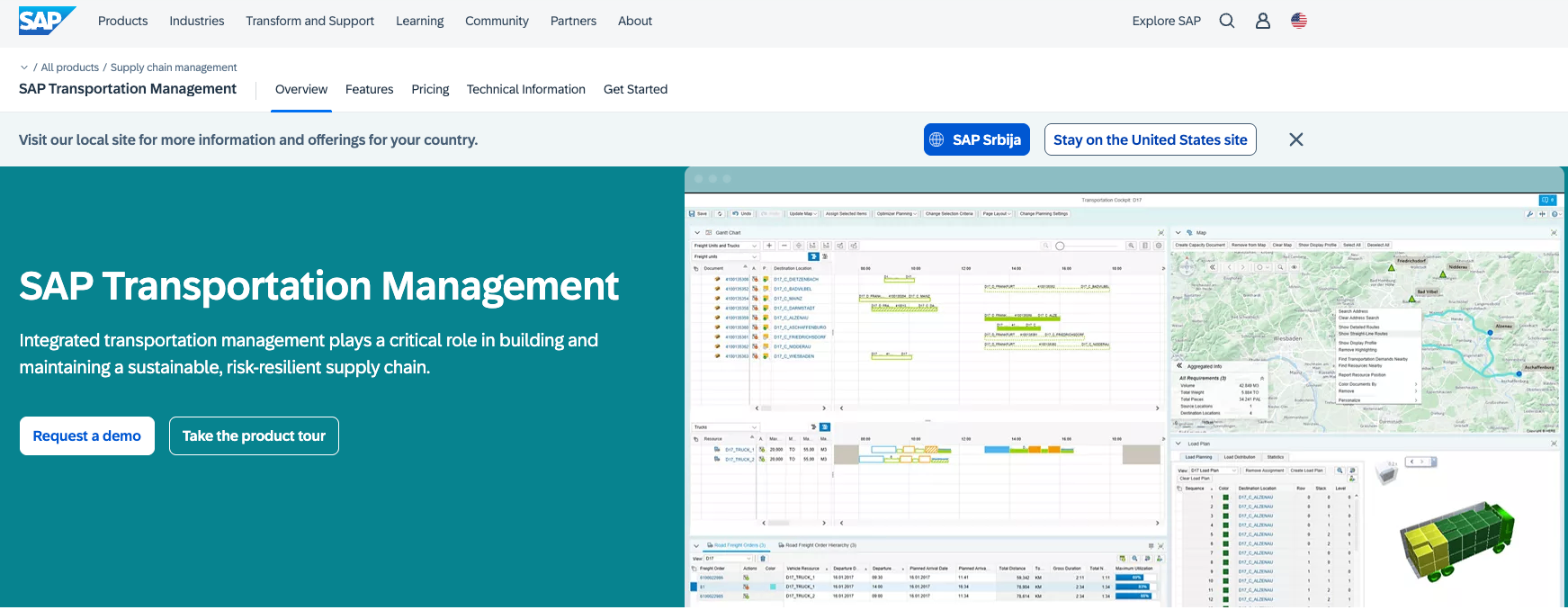
SAP Transportation Management is an enterprise TMS native to S/4HANA. If the group has standardised on SAP and the transport module is genuinely deployed at your site, the data-model argument for staying in the stack is real.
Strengths:
- Native to the SAP data model, so master data, cost centres and financial postings line up without an integration layer.
- Deep functional coverage for complex, high-volume, multimodal networks.
- Already procured at many groups, which removes the vendor selection problem entirely.
Shortcomings:
- Romanian e-Transport is not a native capability, so UIT handling typically needs a partner solution or custom development on top.
- Deployment is a project measured in quarters and owned by group IT, so a local process change is a ticket rather than a configuration.
- The cost and complexity are sized for enterprise operations, which makes it a difficult fit for a Romanian entity running 50 to 500 transports a month.
Alpega: Best TMS for Romanian Shippers Who Also Want a Freight Exchange\

Alpega is worth taking seriously in Romania specifically, because it owns BursaTransport and 123cargo, two freight exchanges with real local adoption. Its wider portfolio includes the Transwide, Inet and TAS-tms transport management products and the Teleroute and Wtransnet exchanges.
Strengths:
- Genuine Romanian market presence and brand recognition through BursaTransport and 123cargo, which many Romanian logistics teams already use.
- Strong spot capacity access, since the exchange is the core asset.
- Broad European coverage across France, Benelux, Iberia and CEE.
Shortcomings:
- The centre of gravity is a freight exchange with TMS products alongside it, so a shipper wanting a single operational platform for the full order-to-invoice lifecycle is buying at the edge of the portfolio rather than the middle.
- Romanian e-Transport is not presented as a headline capability on its public pages.
- Enterprise quote and field sales, with no published pricing.
project44: Best Visibility Layer for Romanian Sites Under a Group Mandate

project44 is a real-time visibility platform across road, ocean, air, rail and parcel, connected to a carrier network the company puts at over 259,000 carriers. It is not a TMS, and treating it as one is the mistake this section exists to prevent.
Strengths:
- Deep multimodal visibility, which is genuinely best-in-category territory for tracking.
- Very large carrier connectivity, so coverage is rarely the constraint.
- Widely mandated at group level, which means the data is often already flowing.
Shortcomings:
- No planning, allocation, document lifecycle, compliance or invoice validation, so it leaves the operational work where it was.
- Romanian e-Transport is out of scope by design.
Where a group has mandated project44, running it alongside an operational platform underneath is the normal arrangement rather than a conflict. Deliwell has a documented integration with project44, so the visibility mandate and the local operation can coexist.
Excel, Email, WhatsApp and the ANAF Portal: Still the Right Answer for Some Operations
This is the incumbent in most Romanian mid-market transport operations, and it deserves an honest hearing rather than a punchline.
Strengths:
- Free. The ANAF e-Transport modules are provided at no cost under article 7 of OUG 41/2022, and the state is obliged to keep them that way.
- No procurement, no implementation, no vendor.
- Everybody already knows how to use it.
- For a company issuing a handful of declarations a month against a stable product list, it works.
Shortcomings:
- Access concentrates in the one or two people holding qualified digital certificates, so holidays and resignations become compliance risk.
- No audit trail beyond whatever somebody saved to a shared drive, which is the wrong answer to an ANAF control.
- Carrier invoices get reconciled by hand against emails, with no rate matching.
- Transport cost stays invisible until the month-end spreadsheet.
- No structural defence against the recurring error types, meaning wrong CN codes, expired UITs and quantity mismatches, which are the breaches that carry confiscation alongside the fine.
The break points are recognisable: past roughly 50 declarations a month, once inbound flows depend on supplier data, once more than one site is declaring separately, or once a single certificate holder is the whole compliance function.
What's the Best TMS for Your Operation?
If e-Transport is the acute pain and you run 50 to 500 UITs a month, the shortlist is genuinely two names. Deliwell and CargoPlanning both handle it natively as shipper-side products. Deliwell is the stronger fit where you also want the finance side, cross-department workflow and e-CMR in one place, and where a published starting price helps you build a business case. CargoPlanning is the stronger fit where tendering and dock slot management are the operational priority.
If a group platform is already in place and the Romanian entity is on spreadsheets, the honest move is to stop trying to make the group platform reach you. Run the local operation on something sized for it and let the group platform keep doing what it was bought for. That pattern is common enough in Romanian manufacturing that it is worth naming in the business case rather than apologising for.
If the group mandates visibility, keep the visibility platform and put an operational layer underneath it. These are different products solving different problems, and replacing one with the other creates a new gap.
If you issue fewer than about 50 declarations a month, stay in the ANAF portal. Spend the money on getting a second person certified instead, and revisit when volume or headcount changes.
If your real problem is that nobody can see transport cost until month-end, no compliance connector fixes that. The question to take into demos is whether the platform matches carrier invoices against agreed rates automatically, and whether cost centres are assigned at order level rather than reconstructed afterwards.
FAQ
Which TMS platforms have native ANAF e-Transport integration?
Deliwell and CargoPlanning both handle Romanian e-Transport natively as shipper-side products, generating UIT codes from transport data inside the platform and submitting to ANAF directly. Transporeon, SAP TM, Alpega and project44 do not present native RO e-Transport as a capability on their public pages, so a Romanian entity evaluating them should get the scope and cost of the e-Transport requirement confirmed in writing.
Do I need a TMS to comply with RO e-Transport?
No. The ANAF modules are free by law under article 7 of OUG 41/2022, and a company can declare manually through the SPV portal indefinitely. A TMS becomes worth the money when declaration volume, inbound supplier data or audit exposure make manual declaration the constraint, which is usually somewhere past 50 declarations a month.
What does a TMS cost in Romania?
Almost every vendor in this category quotes rather than publishes. Deliwell publishes a starting figure of €250 a month. CargoPlanning sells separate modules and states on its own costs page that price varies with orders and users. Transporeon, SAP TM, Alpega and project44 are enterprise quote only. Budget for an implementation fee alongside subscription in most cases.
Our group already runs Transporeon. Do we need anything else?
Often yes, and this is the most common pattern in the Romanian mid-market. A group platform sized for European tendering frequently does not reach the local entity, which then handles Romanian compliance and daily coordination on spreadsheets. Running a right-sized local platform underneath a group system is a normal arrangement rather than duplication.
Is CargoPlanning or Deliwell better for a Romanian shipper?
Both are RO-native with real e-Transport automation, so the choice comes down to scope. CargoPlanning leans towards tendering, spot auctions and dock slot management, sold as separate modules. Deliwell covers the full lifecycle through to invoice validation and KPIs in one subscription, with e-CMR included and a published entry price. Demo both.
Can a TMS handle e-CMR as well as e-Transport?
Some can. Deliwell generates, signs and archives e-CMR in-platform as part of the standard subscription, and Transporeon has an e-CMR product. These are separate legal instruments, since e-Transport is Romanian tax law and e-CMR sits under an Additional Protocol to the CMR Convention, so confirm both explicitly rather than assuming one implies the other.
Case studies


Sonepar Romania centralises transport reporting and cost control with Deliwell

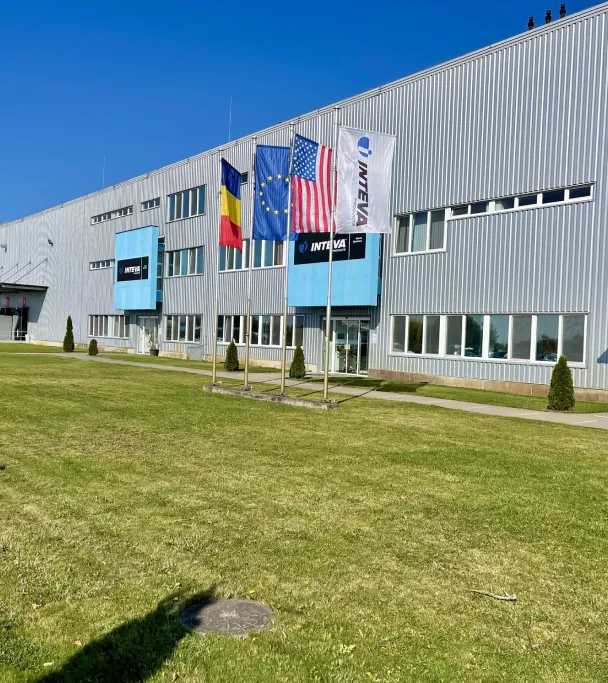

Inteva gains full transport visibility and eliminates manual work with Deliwell



Hamilton Central Europe reduced transports costs by 15% by replacing their old TMS with Deliwell
