
5 Best CargoPlanning Alternatives in 2026
CargoPlanning runs your tenders well — until you outgrow the toolkit and need the whole operation in one place. Here are the five alternatives that actually fit a mid-market EU shipper, and how to tell which one is yours.

Bring structure, visibility, and compliance to your transport operations


Summary
CargoPlanning is a Romanian-built toolkit that runs freight tendering, allocation, and dock scheduling well, with native ANAF e-Transport already handled. Its limit isn't compliance but scope and reach: it covers the planning and procurement slice, not the whole daily operation, the tie-back of carrier invoices to contracts, or a single shared record across sales, warehouse, and finance. We ranked five alternatives by buyer fit, scope, time-to-value, and compliance: Deliwell (mid-market EU shippers wanting the whole operation with native RO compliance and a go-live in weeks), AEB (DACH/global shippers led by customs and trade compliance), MyTower (French and Southern-European shippers wanting transport plus global trade management), Generix (DDS) (a full TMS with first-class carbon/CSRD reporting), and Alpega (large-scale tendering and a carrier exchange). The takeaway: visibility and forwarder tools are often miscategorized as alternatives, and the segment CargoPlanning users most often outgrow — mid-market EU shippers needing the whole operation in one place — is exactly who Deliwell was built for.
CargoPlanning runs your tenders well — until you outgrow the toolkit and need the whole operation in one place. Here are the five alternatives that actually fit a mid-market EU shipper, and how to tell which one is yours.
CargoPlanning does one hard thing very well. If you run annual or spot freight tenders and want carriers competing for your lanes in a structured, transparent way, CargoTender's module was built for exactly that. Romanian shippers have used it to compress tender cycles from two weeks to three days, and the whole product grew out of one goal: kill the phone-and-email back-and-forth that eats a logistics team's week.
It's also Romanian-built, by an Iași software company, so it handles ANAF e-Transport natively. If you're on CargoPlanning today, your UIT compliance is already sorted. That matters here because it removes the usual reason a Romanian shipper switches tools. Compliance is not the gap.
The gap is in scope. CargoPlanning is a set of modules for tendering, allocation, and dock scheduling. It runs the planning and procurement side of transport well. It doesn't try to be the single system that runs the entire daily operation, ties carrier invoices back to contracts, and puts sales, the warehouse, and finance on the same record. Some shippers outgrow the toolkit and want the operation.
This article compares five alternatives that actually fit a mid-market European shipper, what each is built to do, where each breaks, and how to tell which one matches your situation. It closes with the questions to ask in a demo so you don't buy the wrong shape of tool.
TL;DR: which CargoPlanning alternative is the best for you?
- Deliwell: best for mid-market EU shippers who want the whole transport operation in one platform, with native Romanian compliance and a go-live in weeks.
- AEB: best for large DACH (Germany, Austria, Switzerland) and global shippers whose center of gravity is customs and international trade compliance.
- MyTower: best for shippers seeking a single platform for transport and global trade management, especially in France and Southern Europe.
- Generix (DDS) TMS: best for shippers who need a full TMS with carbon and CSRD (Corporate Sustainability Reporting Directive, the EU sustainability reporting directive) reporting as a first-class feature.
- Alpega Group: best for shippers whose core need is large-scale freight tendering and access to a carrier exchange.
If you're a mid-market EU shipper, often a Romanian or CEE entity within a larger group, and you want to run your entire transport operation on one platform with native compliance and fast onboarding, Deliwell is the right CargoPlanning alternative for you. Book a free call.
Side-by-side comparison
What is CargoPlanning built for?

What is CargoPlanning built for?
CargoPlanning, launched around 2015 out of Iași, was built by Nima Software and grew bootstrapped, on its own revenue rather than venture capital. That history shows in the product. It's lean, focused, and built around the problem its founders first saw: shippers wasting hours coordinating carriers over phone and email. Its own framing is a management function that operates like a transport ERP, plus a marketplace function for finding carriers and running auctions.
It's organized as modules you can run alone or together:
- CargoTender is the hero. You post a lane, invite carriers or find new ones, set a target price, and run a structured auction. Carriers see how their bids rank and why an offer was rejected, which keeps the process fast and honest. Otelinox, part of Samsung C&T, runs its freight procurement this way, inviting 40-plus carriers per tender and selecting the best per lane.
- CargoPlanning is the daily module for allocating shipments to carriers, exchanging documents, building forecasts, and exporting reports.
- CargoSlot is a dock-and-warehouse time-slot scheduler, where carriers book loading windows on a shared calendar. Mainfreight Romania adopted it specifically for that.
- CargoOrder handles internal purchase and sale orders across a company's branches and feeds them to the logistics team.
Why are companies looking for CargoPlanning alternatives?
The limits are about scope and reach, not compliance. Shippers start comparing alternatives when one of these patterns shows up.
- You need the whole operation, not the planning slice - CargoPlanning is strong on tendering, allocation, scheduling, and document exchange. The parts that tend to sit thinner come downstream of allocation: matching every carrier invoice back to the contracted rate and flagging the discrepancy before you pay it, allocating cost centres in real time instead of reconstructing them from invoices a month later, and analytics deep enough to drive your next carrier renegotiation. A shipper who wants all of that in one system, rather than a planning module plus spreadsheets plus finance's own process, has outgrown the toolkit.
- The modular structure adds up - Buying CargoTender alone is cheap and sensible. The math changes once you want CargoTender, CargoPlanning, CargoSlot, CargoOrder, plus seats for everyone who touches transport. At that point, you're assembling the operation from parts and paying per part, and an all-in platform can be simpler to reason about, even at a higher headline number.
- You're standardizing beyond Romania - CargoPlanning is rooted in the Romanian market and strongest there. A group rolling transport software out across several CEE or EU entities often wants a vendor positioned around that wider footprint, with multi-entity support and compliance for more than one country's rules.
One thing worth saying clearly: real-time visibility platforms and freight-forwarder software often get listed as CargoPlanning alternatives. They aren't. A tracker like project44 plans and books nothing, and a forwarder platform like CargoWise is built for moving someone else's freight. We cover those in separate guides on [Cargoson alternatives] and the wider TMS market. The five below are genuine shipper-TMS options.
How we evaluated these alternatives
We used four criteria:
- Buyer fit: built for shippers, forwarders, or carriers.
- Scope: a full lifecycle TMS, a planning toolkit, or a single layer.
- Time to value: weeks versus quarters from contract to a working transport order.
- Reach and compliance: how many markets it covers natively and how deep its regional compliance runs.
The read on each tool draws on public reviews from Gartner, G2, and Capterra, vendor documentation, and the TMS evaluations we've sat through with prospects.
Deliwell: best CargoPlanning alternative for shippers who want the whole operation in one platform
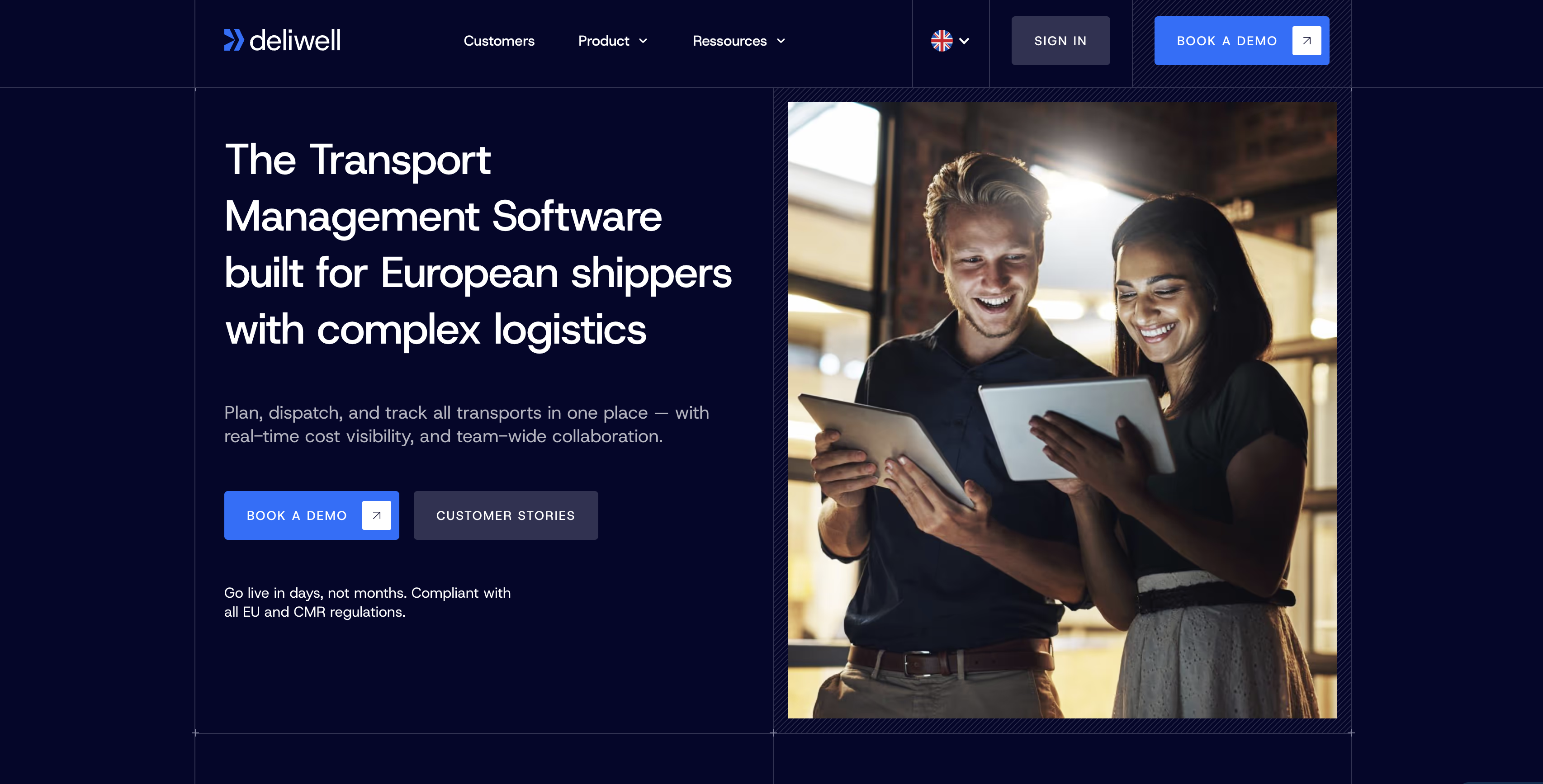
Deliwell is a cloud TMS for European mid-market shippers, and like CargoPlanning, it's built for the Romanian and CEE reality, with native RO e-Transport and UIT.
The difference is in shape. CargoPlanning gives you modules for tendering, planning, and scheduling. Deliwell runs the full transport lifecycle on a single platform, from order creation and allocation through tracking, documentation, compliance, carrier invoicing, and KPIs, with every department working from the same record.
Who is it for? Mid-sized industrial, retail, and wholesale shippers. Usually 200 to 2,000 employees, 50 to 5,000 transports a month, 200-plus partners, often a Romanian or CEE entity inside a multinational group, moving mostly road freight across FTL, LTL, and courier.
What does Deliwell actually cover? This is the gap against a planning toolkit, so the specifics matter:
- Transport order management. Create, assign, and track every order from one dashboard, with planners, sales, warehouse, and finance on the same record.
- Route planning and allocation. Multi-stop planning with vehicle and driver assignment, plus consolidation and grouping for cost efficiency.
- Carrier portal with token access. Carriers receive jobs, confirm pickups, and submit proof of delivery digitally, with no separate sign-up, EU and non-EU carriers in one place.
- Document management with AI extraction. It generates CMRs, e-CMRs, delivery notes, and e-Transport declarations, and reads inbound documents from PDFs, Excel files, images, or forwarded emails, pre-filling the order or UIT for human confirmation.
- Native e-Transport compliance. Full ANAF integration, UIT generated from existing order data, up to 1,000 product lines per UIT on every tier, with compliance updates shipped inside the subscription when ANAF changes the rules.
- Invoice validation. Every shipment is checked against the contracted rate, discrepancies are flagged automatically, and invoices are reconciled against orders before payment. This is the piece that's hard to do with a planning module plus spreadsheets.
- KPI dashboards. Transport cost, on-time delivery, carrier performance, document compliance, CO2 by route or carrier, and cost-center allocation, all in real time.
The payoff, with numbers - Hamilton used Deliwell's cost data to renegotiate carriers and bring transport cost from 3.5% to 2.5% of goods value, around a 28% reduction, alongside a 15% cut in workload. Inteva used real-time budget control on a single route to recover €74,000 a year. In both cases the operational data the platform captures becomes the lever for cutting cost, which a planning-and-tendering tool doesn't reach on its own.
Pricing - Deliwell pricing is fixed, starting at €250/month and scaling with your transport volume — delivered as an all-in-one SaaS subscription with no hidden IT costs. Contact Deliwell for a pricing proposal tailored to your operation.
Where Deliwell falls short - It specializes in road transport first, with air, sea, and rail secondary, so clients whose operations are predominantly ocean or air, and who need in-depth handling of those modes, should look for alternative solutions for that type of transport. It's EU-only, with no US coverage today. And below 50 shipments a month, it's the wrong fit, because a lighter tool will do.
The honest dividing line with CargoPlanning is this: if your main job is running tenders, Alpega or CargoPlanning itself may serve you better. If you want the entire daily operation, including financial audit, in one place, Deliwell is built for it. Trusted by 30-plus enterprise shippers, including Frigoglass, Hamilton, Inteva, Sonepar Romania, and STIHL.
If you think Deliwell is the right CargoPlanning alternative for you, book a demo call to see the savings you'll unlock.
AEB: best CargoPlanning alternative for global shippers with deep customs needs
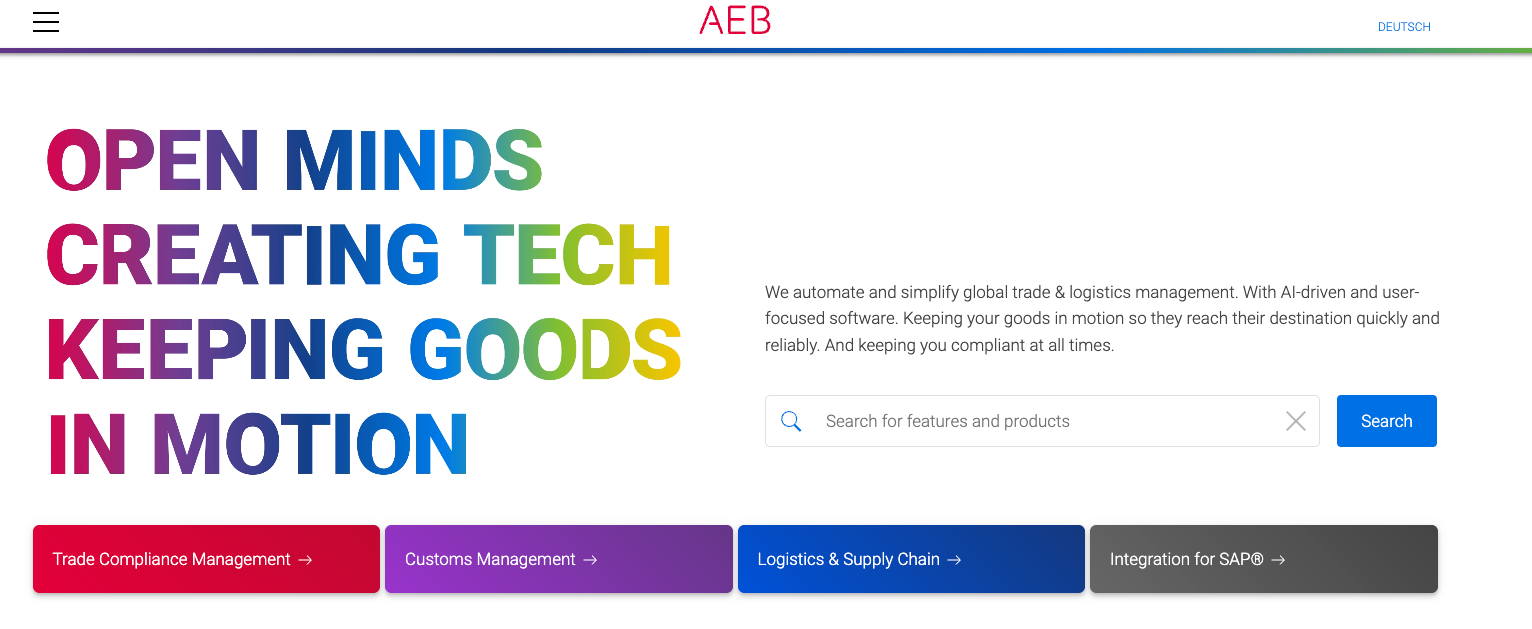
AEB is a German software company that has been building logistics and global-trade software for over 40 years, with more than 7,000 customers worldwide and an employee-owned structure that keeps it independent. Its cloud TMS covers planning, execution, and freight settlement across all modes, but the real center of gravity is global trade: customs filing in more than ten countries, export controls, and trade compliance built into the same platform. It's SAP-certified and designed to sit cleanly alongside SAP S/4HANA, which is part of why it lands with larger DACH and multinational shippers.
Two features stand out. Its workflow modeling uses BPMN (Business Process Model and Notation, a process-modeling standard), so processes are mapped graphically and tailored to each shipper, and it also includes CSRD-compliant carbon reporting and automated freight invoice verification. It connects 230-plus carriers across 20 countries.
Where it fits less well for a CargoPlanning user: AEB is an enterprise-grade, customs-led platform with a field-sales motion and a multi-month implementation. If your pain is daily road transport across Romania and the CEE rather than international customs depth, you'd be buying a lot of trade-compliance machinery you won't use, and you'd still need Romanian e-Transport handled separately. AEB wins when the prospect is a German, Austrian, or Swiss multinational with heavy customs needs. Deliwell wins on RO and CEE-headquartered operations and on speed to value.
Who should pick it: large DACH and global shippers whose biggest challenge is customs and international trade compliance.
MyTower: best CargoPlanning alternative for combined transport and global trade in Southern Europe
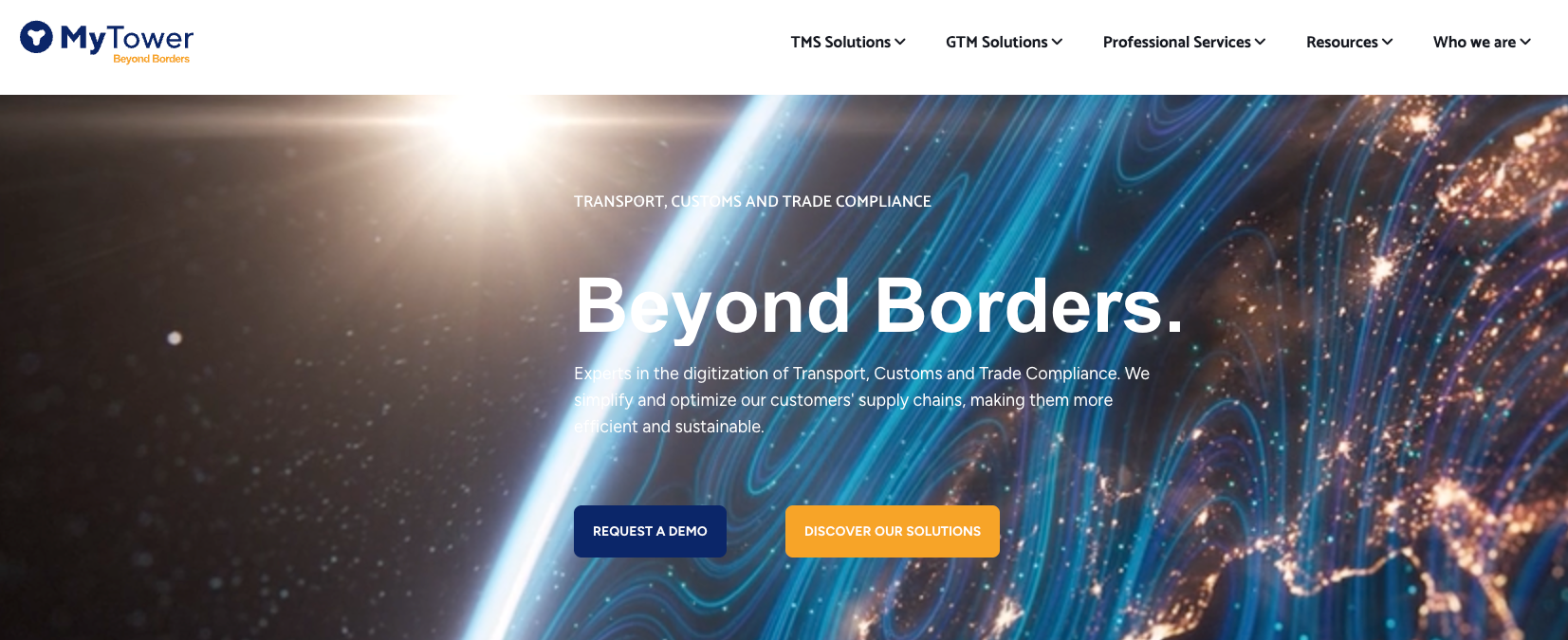
MyTower is a French vendor offering an integrated platform that combines a TMS with Global Trade Management for international transport and customs. It's the most aggressive consolidator in the European market right now.
In April 2026 it announced the acquisition of three companies, TDI (multi-carrier shipment management, parcel, and last-mile), Winddle (collaborative supply-chain platform for fashion, retail, and industry), and Belharra e-SCM (international procurement and upstream visibility), backed since December 2025 by the investment fund Verto Growth. The combined group is now 300-plus employees, headquartered in France, with subsidiaries in Italy, Spain, and Morocco.
That makes MyTower a credible, fast-growing pan-European option, particularly for shippers in France, Italy, and Spain who want transport, customs, and supplier collaboration under one roof. The trade-offs for a CargoPlanning user are reach and integration maturity.
The platform's strength runs through France and Southern Europe, with no announced plan for Central and Eastern Europe, so a Romanian shipper gets neither local-market focus nor native ANAF e-Transport. And a suite assembled from three fresh acquisitions takes time to knit into one clean product, so the "single platform" promise is still being built.
Who should pick it: French and Southern-European shippers who want transport and global trade management on one growing platform.
Generix (DDS) TMS: best CargoPlanning alternative when carbon reporting is a first-class need

Generix DDS TMS is a complete transport management system for shippers, covering planning, execution, and settlement: order splitting and grouping, load and route optimization, carrier allocation and spot quotation, carrier appointments, driver app, tracking, plus pre-invoicing, invoice reconciliation, tender preparation, and performance measurement. It was named in the 2025 Gartner Europe Magic Quadrant for Transportation Management Systems, and Generix and DDS have joined forces to push toward end-to-end supply-chain digitalization, so it's a serious, full-featured European TMS rather than a niche tool.
Its distinctive wedge is sustainability. Carbon-balance reporting is built in, with CO2 measured per shipment and routes and carriers selectable on emissions as well as cost, aimed squarely at CSRD compliance. For a shipper where carbon reporting has become a board-level requirement, that's a genuine reason to look.
Where it fits less well for a CargoPlanning user: Generix is French and Southern-European in its roots and strongest there, so Romanian e-Transport isn't a native, marketed capability, and the platform's depth and breadth come with a heavier, more enterprise sales and implementation process than a focused mid-market shipper may want. On RO and CEE compliance and speed to value, Deliwell stays ahead.
Who should pick it: shippers who need a full TMS and treat carbon and CSRD reporting as a primary, not optional, feature.
Alpega Group: the best CargoPlanning alternative for large-scale tendering and a carrier exchange
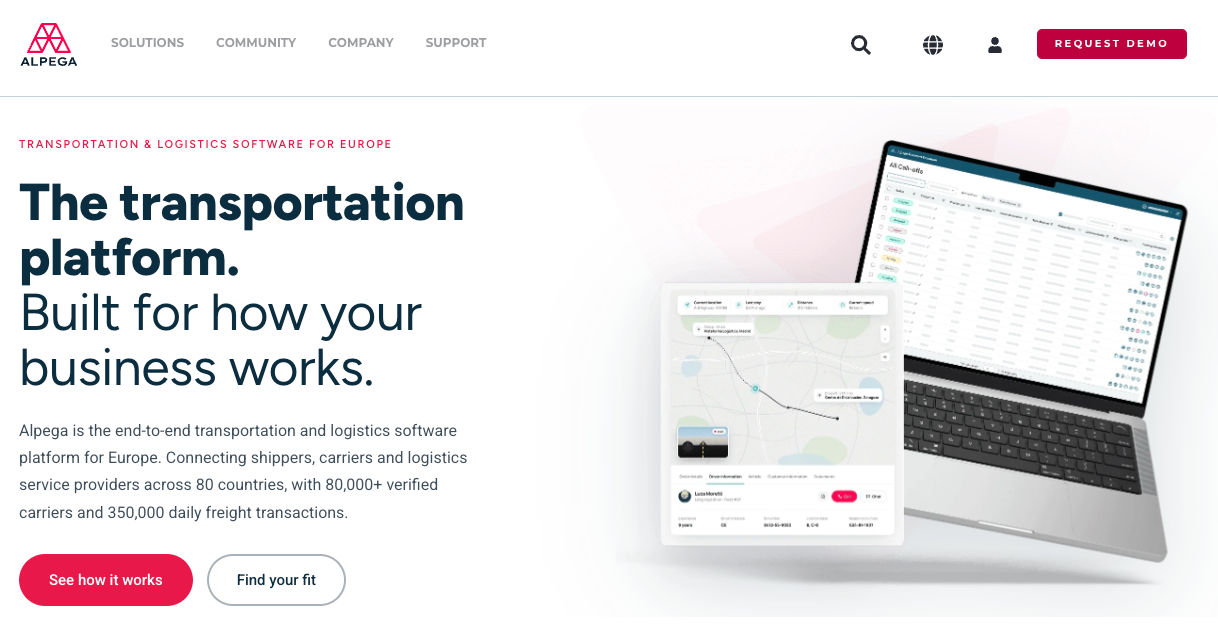
If tendering is the reason you're on CargoPlanning, Alpega is the alternative built around that at a larger scale. Its TenderEasy module runs structured freight procurement, and its exchanges, Teleroute and Wtransnet, are two of the largest load boards in Europe, so you can lock annual rates through a tender and find spot capacity on the exchange in one place. Alpega also sells TMS products, Transwide and inet, though the suite was assembled through acquisitions, so daily execution doesn't run as cleanly as a platform built as a single piece.
It fits shippers whose biggest job is sourcing capacity and locking rates, particularly across borders where a deep carrier exchange has real value. For daily execution, the documents, and the invoicing, a purpose-built operational TMS handles those better, and compliance is generic rather than built around country-specific rules like Romanian e-Transport. Pricing is a direct sale that depends on which pieces you take.
Who should pick it: shippers whose main need is large-scale freight tender and access to a carrier exchange.
How to choose the best CargoPlanning alternative for you? A decision framework
Start with what you are, then with what hurts most.
- You're a large DACH or global shipper, and customs and trade compliance are the hard part; choose AEB.
- You're in France, Italy, or Spain and want transport plus global trade management on one platform. Choose MyTower.
- Carbon and CSRD reporting is a board-level requirement, and you need a full TMS around it; choose Generix.
- Your single biggest job is tendering and finding spot capacity. Choose Alpega, or stay on CargoPlanning if its scale suits you.
- You're a mid-market EU shipper, often an RO or CEE entity, and you want the entire daily operations, finance, and compliance on one platform. Choose Deliwell.
If you're a mid-market EU shipper, often a Romanian or CEE entity inside a larger group, and you want to run the whole transport operation on one platform with native compliance and fast onboarding, Deliwell is the right CargoPlanning alternative for you. Book a free call.
Frequently asked questions
Is Deliwell a CargoPlanning competitor? They overlap on Romanian and CEE mid-market shippers, and they're shaped differently. CargoPlanning is a set of modules for tendering, allocation, and dock scheduling. Deliwell runs the full daily operation as one platform, with carrier invoice validation, compliance, and business analytics included rather than added on.
Does CargoPlanning handle Romanian e-Transport? Yes. CargoPlanning is built in Romania and handles ANAF e-Transport natively, so UIT compliance is covered. Deliwell also has native RO e-Transport and UIT, so for a shipper already on CargoPlanning, compliance is rarely the reason to switch. Scope and reach usually are.
CargoPlanning vs Deliwell: which is right for a mid-market shipper? Pick CargoPlanning if your main job is running tenders and allocating shipments, and your audit and reporting processes already work. Pick Deliwell if you want one platform for the whole operation, including invoice validation against contract rates, real-time cost-centre allocation, cross-department workflow, and analytics that feed carrier renegotiation.
Which CargoPlanning alternative is best for a shipper with heavy customs needs? AEB, which has built customs and global-trade software for over 40 years and files customs in more than ten countries. For a Romanian or CEE shipper whose hard part is daily transport rather than customs, Deliwell is the closer fit.
Which CargoPlanning alternative has the strongest carbon reporting? Generix DDS TMS treats carbon-balance and CSRD reporting as a first-class feature, with CO2 measured per shipment and carriers selectable on emissions. Several full TMS platforms now include carbon reporting, so weigh it against scope, compliance, and speed for your situation.
How is CargoPlanning priced compared to a full TMS? CargoPlanning uses a modular subscription, with CargoTender, CargoPlanning, CargoSlot, and CargoOrder available separately or together. Deliwell has fixed pricing from €250/month, scaling with your transport volume, delivered as an all-in-one SaaS subscription. Compare on the all-in cost of the modules and seats you'd actually use, not the entry price. Confirm current CargoPlanning pricing with the vendor.
Case studies


Sonepar Romania centralises transport reporting and cost control with Deliwell



Inteva gains full transport visibility and eliminates manual work with Deliwell



Hamilton Central Europe reduced transports costs by 28% by replacing their old TMS with Deliwell
