
5 Best Cargoson Alternatives To Use in 2026
Ranked by buyer fit, scope, time-to-value, and compliance — so you can find the one that fits your use case, not just the cleanest booking screen.

Bring structure, visibility, and compliance to your transport operations


Summary
Cargoson is a strong multi-carrier booking and rate-comparison tool, but plenty of mid-market EU shippers outgrow the booking layer when transport becomes a full operation, when a Romanian or CEE entity needs native ANAF compliance, or when regional carriers fall outside its network. We ranked five alternatives by buyer fit, scope, time-to-value, and compliance: Deliwell (mid-market EU shippers needing a full operational TMS with native compliance and a go-live in weeks), Transporeon (enterprise carrier-network scale), project44 (real-time visibility on top of an existing TMS), CargoWise (forwarders/3PLs), and Alpega (freight tender and carrier exchange). The takeaway: visibility platforms and forwarder tools often get miscategorized as alternatives, so co-existence beats replacement, and the most underserved segment, mid-market EU shippers with a RO/CEE entity, is exactly who Deliwell was built for.
Cargoson is a good tool. If your main job is booking freight across a dozen carriers without logging into a dozen portals, it does that cleanly, and its users say so. On Capterra it holds 4.8 stars across 51 reviews, with the highest marks going to ease of use and support.
People still look for alternatives for one of three reasons. They've outgrown carrier booking and need a system that runs the whole transport operation, from planning through finance, compliance, and reporting. Their Romanian or CEE entity needs native ANAF compliance that a booking tool doesn't cover. Or they rely on smaller regional carriers that don't plug into Cargoson's network.
This article compares five Cargoson alternatives and tells you which one fits your situation. Most mid-market EU shippers land on the same answer. The rest comes down to what you need transport software to do.
TL;DR: Which Cargoson alternative fits you?
- Deliwell: best for mid-market EU shippers who need a full operational TMS with native EU compliance and a go-live in weeks.
- Transporeon: best for enterprise shippers who need the largest European carrier network and procurement at scale.
- project44: best for shippers who already have a TMS and need real-time visibility on top.
- CargoWise: best for freight forwarders and 3PLs, not shippers.
- Alpega Group: best for shippers whose main need is freight tender and a carrier exchange.
If you're a mid-market EU shipper that needs to run the whole transport operation, with native Romanian and CEE compliance built in and a go-live measured in weeks, Deliwell is the right Cargoson alternative for you. Book a free call.
Side-by-side comparison
What Cargoson is built for
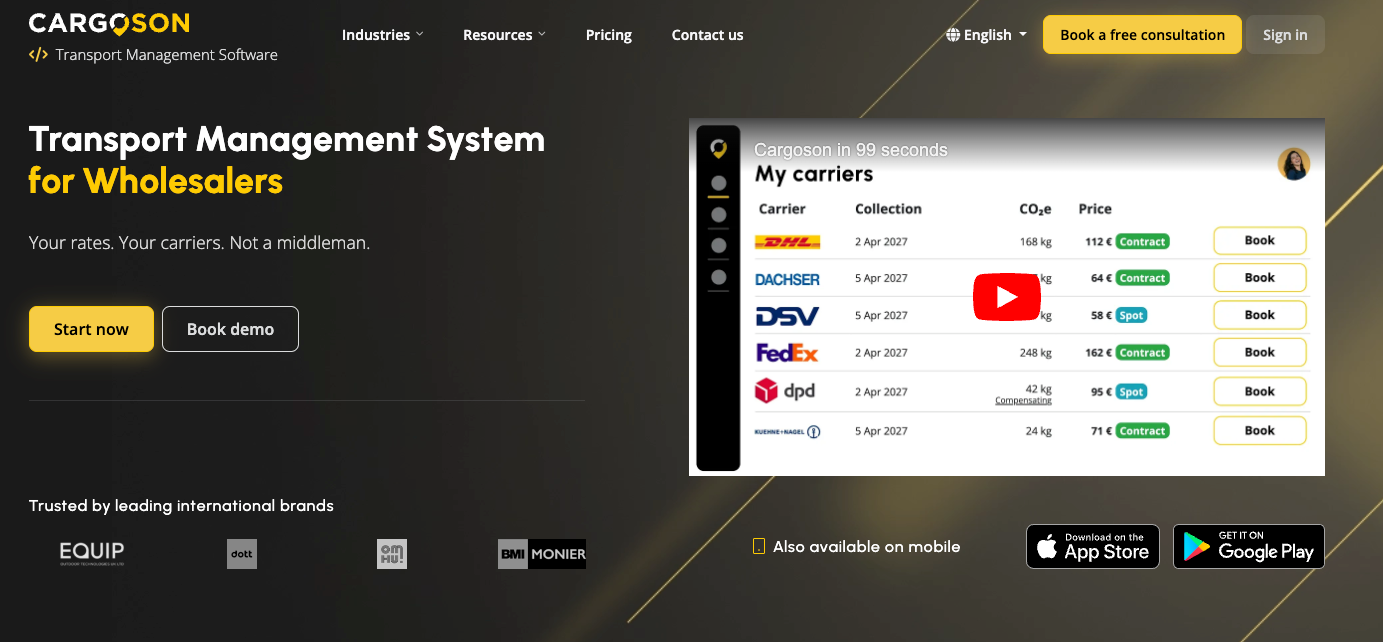
Cargoson is a carrier-neutral transport management platform built in Tallinn in 2018 by a team that came out of DSV and Kuehne+Nagel. You bring your own carrier contracts and rate sheets, and the platform lets you compare prices, book, and track across road, parcel, air, sea, and rail from one dashboard. It connects to more than 2,000 carriers and to ERPs like Microsoft Dynamics, SAP, NetSuite, and Odoo. Around 500 manufacturers and wholesalers across Europe and North America use it.
The pitch is simple and it lands. Stop logging into ten carrier sites and chasing quotes by email. Upload your negotiated rates, see the cheapest option for each shipment, book it, track it. Pricing starts at about $299 a month and climbs with volume, with most mid-sized shippers paying between $300 and $900. For a logistics team drowning in carrier portals, that's real relief, and the reviews reflect it.
Why are companies looking for Cargoson alternatives?
The limits show up when transport stops being a booking task and becomes an operation.
Cargoson sits on the booking and rate-comparison layer. Planning depth, carrier invoice reconciliation, cross-department workflow, and deeper analytics live somewhere else, often back in Excel. Inside a mid-market shipper, transport gets touched by sales, purchasing, the warehouse, finance, and dispatch. A tool that connects the logistics desk to carriers covers part of that. The rest of the operation stays disconnected.
Compliance is the second gap, and for Romanian and CEE shippers it's the one that bites. Cargoson generates standard EU documents like CMRs and electronic waybills. Its marketed feature set doesn't include native ANAF e-Transport with UIT generation or RO e-Factura. A shipper headquartered in Romania, or a local entity of a group, spends most of its compliance effort exactly there.
The third gap is carrier coverage at the edges. Cargoson's value comes from carrier integrations, so its reach depends on which carriers connect. Reviewers point out that smaller, independent, or regional carriers without EDI aren't always fully supported. If a chunk of your freight moves on local hauliers, that matters.
None of this is a knock on Cargoson. It's built for a specific job. The five alternatives below cover the situations where a different shape of product fits better.
How we picked these alternatives
We weighed four things: who the product is built for (shipper, forwarder, or carrier), how much it covers (a full TMS, a booking layer, or visibility only), how fast it goes live, and how deep its regional compliance runs. The read on each tool draws on public reviews from Gartner, G2, and Capterra, vendor documentation, and the TMS evaluations we've sat through with prospects.
Deliwell: best Cargoson alternative for mid-market EU shippers who need the whole operation

Deliwell is a cloud TMS for European mid-market shippers. It covers the full transport lifecycle on one platform: order creation, allocation, tracking, e-CMR, invoice validation, and KPIs. Where Cargoson optimizes the booking step, Deliwell runs the operation around it and connects the departments that touch transport.
It's built for mid-sized industrial, retail, and wholesale shippers. Usually 200 to 2,000 employees, 50 to 5000 transports a month, 200+ partners, often a Romanian or CEE entity inside a multinational group, moving mostly road freight across FTL, LTL, and courier.
Where it pulls ahead of Cargoson:
- Compliance is native and stays current. RO e-Transport and UIT generation run through a direct ANAF integration, with e-CMR included and e-FTI readiness for 2027. When ANAF changes the rules, the platform updates inside the subscription, so nobody on your team files a ticket to stay compliant. A single UIT can carry up to 1,000 product lines.
- It works across departments. Sales, purchasing, warehouse, finance, and dispatch see the same transport record. Most TMS platforms connect logistics to carriers and stop there.
- The analytics earn their keep. Hamilton used Deliwell's cost data to renegotiate carriers and cut transport cost from 3.5% to 2.5% of goods value, around a 28% drop, alongside a 15% cut in workload.
- It goes live fast. Standard go-live runs 1 to 2 weeks, or 4 to 6 with full ERP integration, and the first transport order takes under 30 minutes.
On pricing, Deliwell works differently from a monthly seat fee. It uses value-based pricing tied to the savings the platform surfaces for you, rather than per-module or per-seat fees. You buy the whole operation in one platform, so the cost tracks the value it identifies rather than the number of features you switch on. Set against a $299-a-month booking tool, that's a different conversation, because it's a different product solving a bigger problem.
Where Deliwell falls short:
- Road-first. FTL, LTL, and courier are core, with air, sea, and rail secondary. Heavy ocean or air operations should look elsewhere.
- EU-only. No US coverage today, so groups with significant North American operations need a separate tool there.
- Wrong fit below 50 shipments a month. At that volume a lighter tool, or even a spreadsheet, will do.
If you're a mid-market EU shipper that needs more than Excel but can't justify the cost and complexity of an enterprise TMS, and you want full transport management with EU compliance built in and a go-live measured in weeks, Deliwell is the right Transporeon alternative for you. Book a free call.
Transporeon (Trimble): best Cargoson alternative for enterprise carrier-network scale
Transporeon sits at the top of the European TMS market. Trimble acquired it for €1.88 billion in 2023, and its carrier network is the largest on the continent. The dock scheduling, freight procurement, and sourcing modules are deep. For a global enterprise shipper with a procurement team and tens of thousands of monthly loads, it's a serious platform.
That scale is also the catch. Standard rollouts run 6 to 18 months, and configuring the API gateway alone can cost around €100,000 before a single workflow goes live. Public reviews on Gartner and Capterra mention a complex UI and a steep learning curve. For an enterprise with a dedicated rollout team, that's manageable. For a mid-market shipper comparing it against Cargoson, it's a different weight class.
On compliance, Transporeon's Digital Transport Documents product covers eCMR and the EU eFTI framework. Romania's country-specific e-Transport with UIT usually needs custom configuration or a connector on top. Pricing is an enterprise quote that scales with volume, with no published list price.
Who should pick it: enterprise shippers who need the biggest carrier network and procurement at scale, with the IT resources to run it.
project44: best Cargoson alternative for real-time visibility on top of what you have
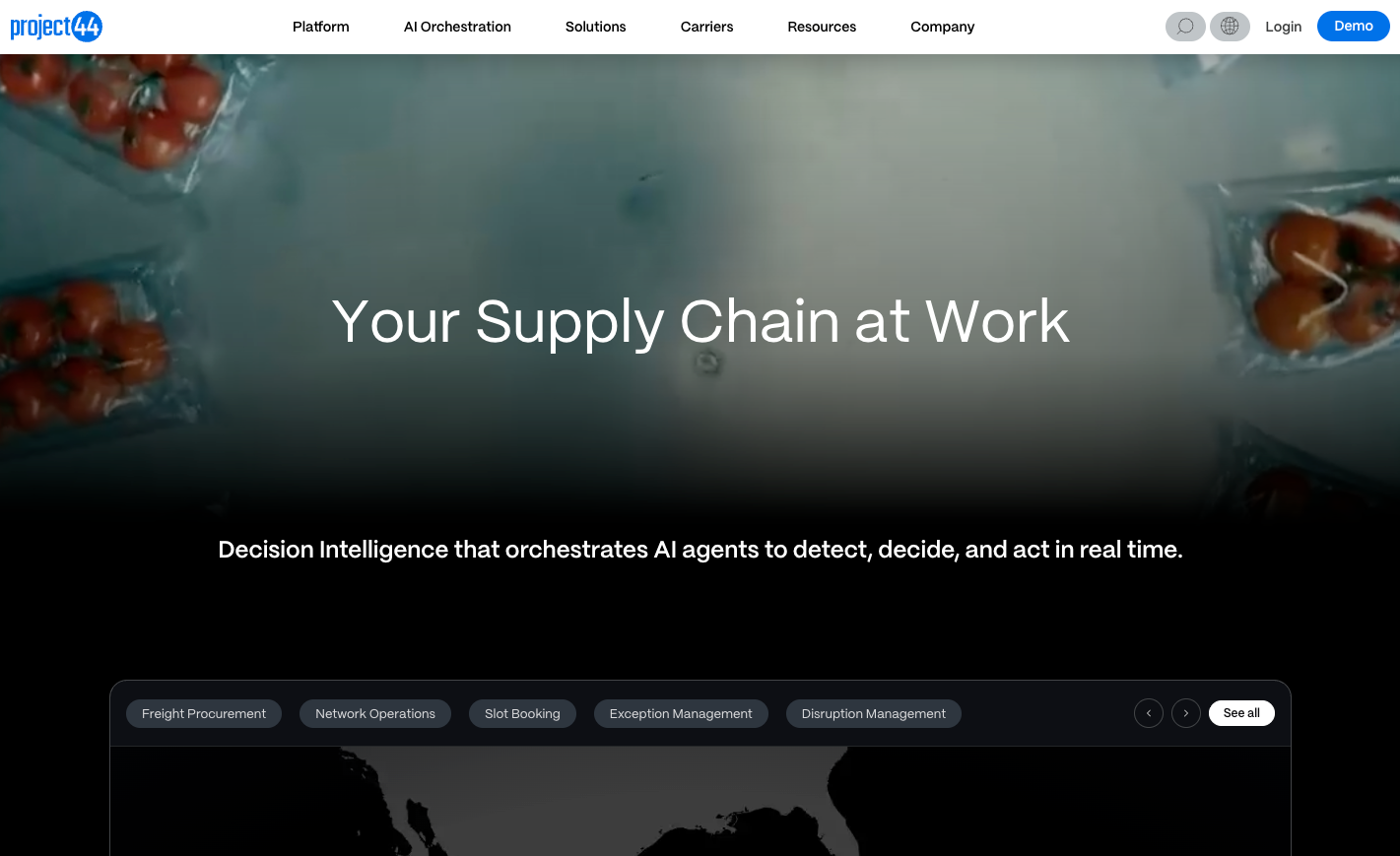
project44 tracks where your freight is, in real time. It connects carrier telematics and your systems, then turns raw location feeds into live ETAs and delay alerts across road, ocean, air, rail, and parcel. The network is large: more than 259,000 carriers across 186 countries, moving around 1.5 billion shipments a year.
It doesn't plan a shipment, allocate it, or handle the invoice. It's a visibility layer that runs on top of a TMS you already have. (The platform has added booking and TMS features lately, but visibility is still the reason shippers buy it.) On G2 it holds 4.7 stars across roughly 690 reviews, with the same caveat that keeps surfacing: tracking for smaller carriers can be inconsistent.
For a shipper moving trucks around Europe, full real-time visibility across every mode is often more than the job needs. The value climbs with global, multi-modal complexity. Deliwell integrates with project44 directly, so groups that are mandated to run it for visibility can keep it and add an operational platform underneath.
Who should pick it: shippers who already run a TMS and need real-time multimodal visibility on top.
CargoWise: best Cargoson alternative for forwarders, not shippers

CargoWise runs the business of a freight forwarder. It handles booking and managing multi-modal shipments for clients, filing customs across borders, tracking containers, and billing the customers whose freight is moving. WiseTech Global built it deep, and for a forwarder, customs broker, or 3PL, that depth is the point.
A shipper inherits a lot of machinery they'll never use, because the workflows assume you're moving someone else's freight. There's also the cost picture. In December 2025 WiseTech moved about 95% of CargoWise customers onto a per-transaction model called Value Packs, and trade press including The Loadstar reported forwarders facing cost increases of 20 to 50%. Implementations commonly run 6 to 12 months or longer.
The trap is the shipper who tries CargoWise because they wanted more than Cargoson, then lands on a platform built for a different business.
Who should pick it: freight forwarders, customs brokers, and 3PLs running multi-modal international logistics.
Alpega Group: best Cargoson alternative for tender and a carrier exchange
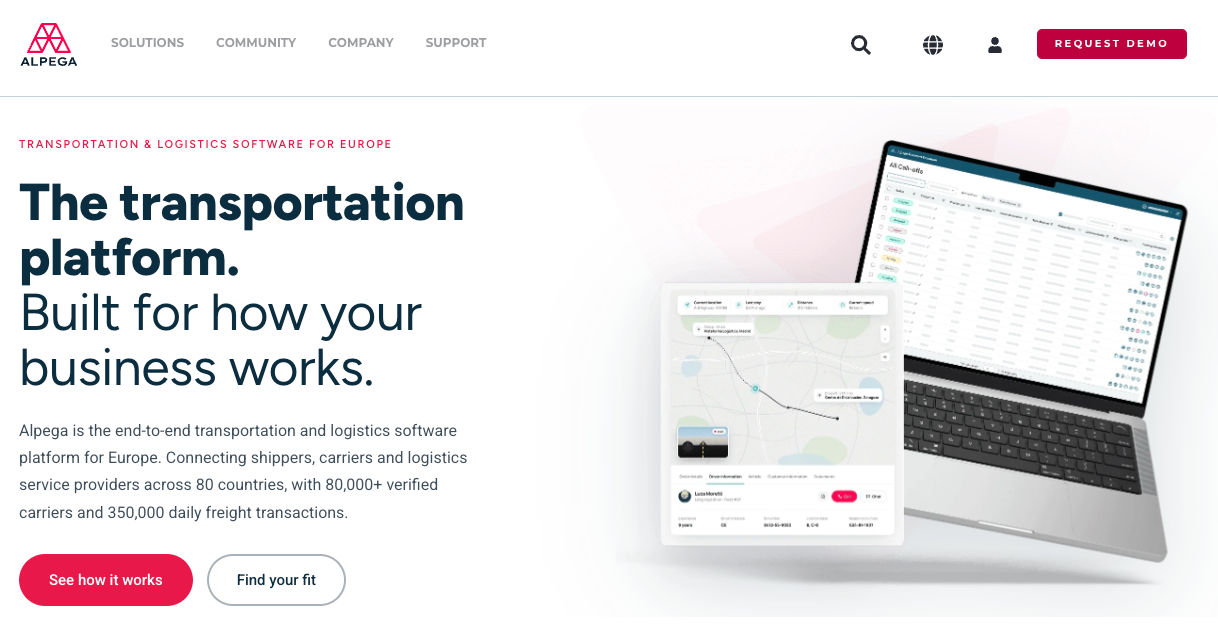
Alpega is a group of freight platforms under one roof. The parts that matter for a shipper are its procurement tool, TenderEasy, and its freight exchanges, Teleroute and Wtransnet, two of the largest load boards in Europe. Together they answer one question well: who moves this load, and at what price. Alpega also sells TMS products (Transwide and inet), though the suite was assembled through acquisitions, so the day-to-day execution layer doesn't run as cleanly as a single-piece platform.
If your biggest headache is sourcing capacity and locking rates, Alpega's depth sits where you need it. If your real pain is daily execution, the planning, the documents, the invoicing, a purpose-built operational TMS will serve you better. Pricing is a direct sale that depends on which pieces you take.
Who should pick it: shippers whose main need is freight tender and a carrier exchange.
How to choose the right Cargoson alternative for you?
- Freight forwarder or 3PL? CargoWise.
- Enterprise needing the largest carrier network and procurement at scale? Transporeon.
- Already running a TMS and only need real-time visibility on top? project44.
- Main pain is freight tender and spot capacity? Alpega.
- Mid-market EU shipper running 50 to 5000 transports a month, with a Romanian or CEE entity, needing a full operational TMS and native compliance? Deliwell.
Book a free demo to see the savings Deliwell can unlock.
Bottom line
- Cargoson is a strong multi-carrier booking and rate-comparison tool, well-liked for good reason. The question is whether you need a booking layer or a system that runs the whole transport operation.
- Visibility platforms (project44) and forwarder software (CargoWise) get filed under Cargoson alternatives, but they solve different problems for different buyers. Co-existence is often the right answer.
- For Romanian and CEE shippers, native compliance (RO e-Transport, e-CMR, e-Factura) is the clearest line between a general European booking tool and a platform built for the local reality.
- Don't compare on the monthly sticker. Compare on what each tool covers and what it saves you.
- Mid-market EU shippers with CEE operations sit in the segment Deliwell was built for. If that's you, book a free call
FAQ
Is Deliwell a Cargoson competitor?
They overlap on mid-market EU shippers, and they're built around different jobs. Cargoson consolidates multi-carrier booking and rate comparison. Deliwell runs the full transport operation, from planning and execution to finance, compliance, and reporting, with native Romanian and CEE rules built in.
Which Cargoson alternative supports Romanian e-Transport (UIT)?
Deliwell has native RO e-Transport and UIT generation through a direct ANAF integration, included in the subscription. Cargoson generates standard EU transport documents such as CMRs, but native ANAF e-Transport isn't part of its marketed feature set.
Is Cargoson a full TMS?
Cargoson is a shipper TMS focused on carrier booking, rate comparison, and tracking. Deeper planning, cross-department workflow, and carrier invoice reconciliation are where shippers tend to outgrow it and move to a broader operational platform.
Cargoson vs Deliwell: which is right for a mid-market shipper?
Pick Cargoson if your main need is booking and comparing rates across many carriers from one screen. Pick Deliwell if you need to run planning, execution, finance, compliance, and reporting as one connected operation, especially with Romanian or CEE compliance in the mix.
How much does Cargoson cost?
Cargoson publishes pricing that starts around $299 a month and scales with shipment volume, with most mid-sized shippers paying between $300 and $900. It uses a one-time setup fee and monthly or annual billing, with no long-term contract required.
Case studies


Sonepar Romania centralises transport reporting and cost control with Deliwell



Inteva gains full transport visibility and eliminates manual work with Deliwell



Hamilton Central Europe reduced transports costs by 28% by replacing their old TMS with Deliwell
